A glimpse into the project
The Vrindavan Project, a testament to devoted and profound significance, led by the Mohanji Foundation, unfolds as a remarkable journey in spiritual foresight. Transitioning from Dwapara Yuga to Kali Yuga, amidst the submergence of the legendary city of Dwaraka, Lord Krishna entrusted his friend Uddhava with a sacred mission — the relocation of the divine idol of Guruvayurappan to the southern realms of India. In the present era, the Vrindavan Project completes a celestial cycle, reverently restoring Guruvayurappan’s essence to its spiritual origin. In an exclusive interview, Mr. Sangeeth Jayantan, one of the project leaders, unravels the profound significance for all adherents of Sanatana Dharma.
The Awakening Times (TAT): Tell us about Lord Guruvayurappan, a form of Lord Krishna. Why do people feel a strong connection to this particular manifestation?
Sangeeth Jayantan (SJ): Guruvayurappan, ‘the Lord of Guruvayur,’ literally translated, is the presiding deity at the Guruvayur temple in Kerala. The idol of Guruvayurappan is in the Chaturbahu – or four handed resplendent form of Lord Vishnu. Nevertheless he is worshipped as the eight year old boy form of Krishna, who is considered as Vishnu’s Purna Avatar (or complete or perfect incarnation). Krishna is considered as Supreme Consciousness manifested in a human form. Through his lifetime he has played the role of a child, lover, husband, friend, warrior, guide, yogi, politician, king-maker, charioteer, reformer, nation-builder, negotiator and many others, in its most perfect form. He was completely engaged in life through each of these roles, albeit being totally unattached. So every person feels that they can connect with Krishna in whatever their orientation is, and still relate to the ultimate and supreme nature in Him. This form is what is manifested and embodied in Guruvayurappan, which makes this one of the most popular temples of India.
TAT: Mohanji has undertaken the construction of a new temple in Vrindavan, replicating The Guruvayurappan Temple. What is the significance of this project, and why was Vrindavan chosen as the location?
SJ: Krishna spent his childhood in Vrindavan, which is in the Northern part of Bharat. Guruvayurappan is worshipped as little Krishna at the temple in Guruvayur, Kerala, which is in the Southern part of Bharat. The idol of Guruvayurappan, originally manifested and given to Brahma by Lord Vishnu Himself, was passed along to Brahma’s children, the Prajapatis, to aid the creation process on earth and was passed along through generations until it reached Vasudeva and Devaki, Krishna’s parents, who worshipped it. Krishna Himself had worshipped it. Foreseeing the shift of times from Dwapara Yuga to Kali Yuga, as well as the submergence of Dwaraka (Krishna’s palace city) in the ocean due a deluge, He asks his friend Uddhava to take the idol to South of India. With the timely intervention and support from the divine and venerated beings such as Brihaspati (Guru of Devas), Vayu (Lord of Winds), sage Parasurama as well as Lord Shiva and Goddess Parvati, the idol was installed at a place in South of India, which we know as Guruvayur today.
By leading this momentous project Mohanji Foundation is embarking to :
- Recreate Guruvayurappan (Little Krishna) temple in Vrindavan – the land of Bhagwan Shri Krishna
- Spread Guruvayurappan consciousness across the world, by enabling access to all
genuine seekers – a privilege not possible in the original temple in Guruvayur, Kerala
- Create a temple town ecosystem which inspires a lifestyle oriented to spiritual transformation.
- Create an amalgamation of the worship systems of North and South of Bharat, rooted in the principles of Sanatana Dharma
With this project The cycle which started at the end of Dwapara Yuga with the idol moving to Kerala from Krishna’s land (Vrindavan), is getting completed with Guruvayurappan’s essence installed back at Vrindavan.
TAT: It is exciting to know that anyone who follows the principles of Sanatana Dharma, regardless of their country of origin, religious beliefs would be granted entry to the temple. Could you talk more about the features of this temple?
SJ: At Vrindavan, Mohanji’s vision is to create a temple town ecosystem which inspires a lifestyle oriented to spiritual transformation, so that, regardless of one’s spiritual orientation or preferred spiritual path, whether it is bhakti (devotion), jnana (knowledge), karma (selfless action) or kriya (meditative practices), the temple provides the opportunity & a platform, to attain the ultimate.
The temple also will have a centre for performing Annadaan or food seva, a Gaushala for shelter of cows and calves, both aligned with the karma yoga (selfless action) path. The temple complex would also include a Home or Shelter for Abandoned Women, of whom there are quite a few in the Vrindavan area. Many of these women are left alone there to fend for themselves, by their own relatives, and most of them need medical and livelihood support. Our Shelter is aimed to provide a home for such women, who would be treated with care and respect.
The daily rituals & routines at the Vrindavan temple will be as per those followed at the original temple in Guruvayur, Kerala. This is to ensure & maintain the authenticity and sanctity of the idol and the temple. The temple thereby introduces the traditional rituals and way of worship followed in Southern Bharat to Northern Bharat, enabling a mutual appreciation and unification of worship systems.
Aligned with the Jnana Yoga (knowledge) path, the temple will house a library and other facilities to learn, share and impart the wisdom from the scriptures and prominent texts of Sanatana Dharma. In addition, there would be daily Parayan (chanting) of spiritual texts like Srimad Bhagavatham or Bhagavad Gita, for the devotees to experience the divine presence of Guruvayurappan through ageless wisdom combined with intense devotion. It will be a sanctuary where people of all ages and backgrounds can come together, find inspiration, solace, wisdom as well as develop & strengthen their spiritual practices.
The temple will also serve as a cultural hub, fostering a sense of belonging and preserving the rich heritage, traditions, and rituals associated with Lord Guruvayurappan. It will be a venue for religious festivals, cultural events, and educational programs that promote interfaith understanding and appreciation.
The Guruvayurappan temple at Vrindavan will not just be a place of worship but the unification of all humanity and brotherhood, to spread the art forms and the essence of Krishna beyond rituals as told through Uddhava Gita, Bhagavad Gita etc.
TAT: How does this project connect with the community at large?
SJ: At the heart of every thriving community is a sacred space that nourishes the spirit, fosters unity, and provides solace in times of joy and sorrow. The proposed Lord Guruvayurappan Temple aims to fulfil these profound needs by bringing the divine presence of Lord Guruvayurappan, an embodiment of compassion, healing, wisdom, purposefulness, and enterprise, to the vibrant & auspicious land of Vrindavan.
The Vrindavan Guruvayurappan Temple will extend beyond religious and spiritual dimensions, making a profound impact on the community it serves. It will be a hub for various outreach programs and initiatives. The temple will establish a cultural and educational centre, offering classes on Hindu philosophy, spiritual practices, yoga, and meditation. These programs will contribute to the holistic development of individuals, nurturing their physical, mental, and spiritual well-being.
The temple will actively promote interfaith dialogue, fostering mutual understanding, respect, and harmony among people of diverse religious backgrounds. It will organise panel discussions, conferences, and workshops that encourage meaningful conversations on spirituality, ethics, and shared values.
The temple will engage in humanitarian efforts, reaching out to the underprivileged, providing healthcare services, and supporting local charitable organisations. By organising food drives, clothing distribution, and education initiatives, the temple will contribute to the welfare and upliftment of the wider community.
TAT: You mentioned the focus on maintaining the authenticity & sanctity of the new temple. Could you explain this further?
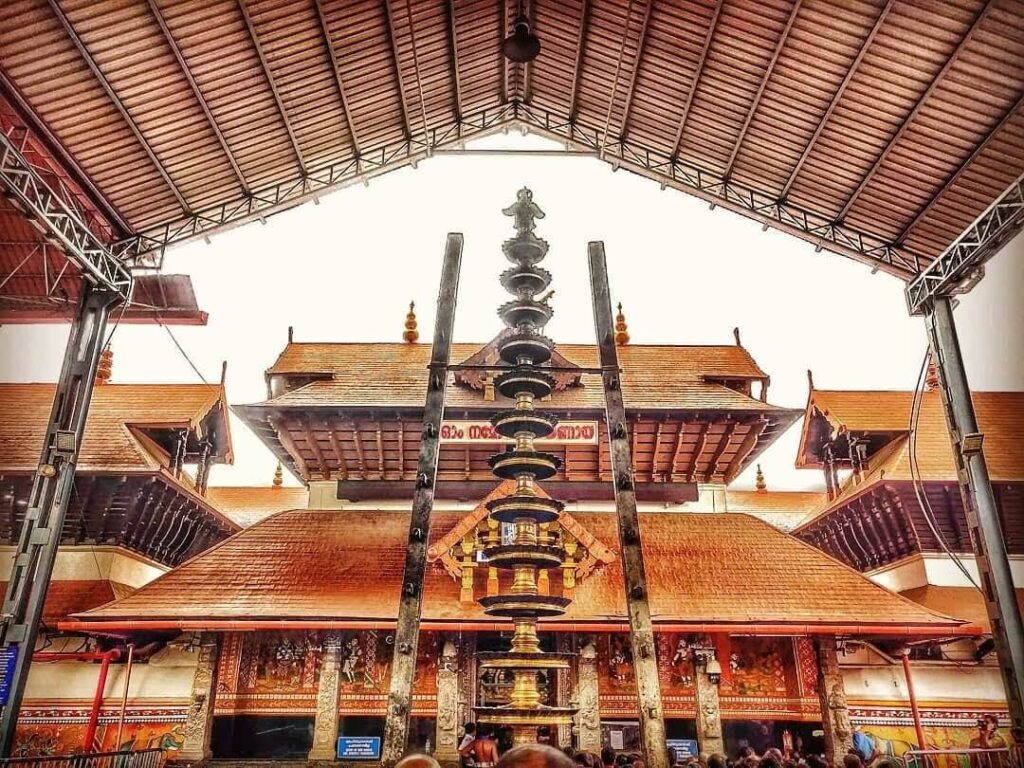
SJ: Sure, Brahmasri Eekkad Neelakandan Namboodiripad has been anointed as the Chief Priest and Spiritual Advisor (Aachaaryan) for the Vrindavan Guruvayur temple project. Renowned Vastu (traditional Vedic architecture) expert Sri Kanippayyur Kuttan Namboodiripad is the main architect for this project, and he will be accompanied by designer & architect Sri Jayan Bilathikulam, who are focusing their efforts to ensure that the new temple structure is not only aligned with the Vastu principles but also is similar to the temple structure of the original Guruvayur temple in its design & architecture. The Chief priest is involved from the early stage to ensure that the temple structure as well as the rituals followed are aligned & similar to those followed at Guruvayur. The construction team is being selected based on their prior experience and expertise in delivering on projects with such significance, need for detail-focus.
TAT: Where are you with the project now?
SJ: The first phase of the land acquisition has been completed for the project. Work is being planned to start in Q1 of 2024. The Prana Pratishta or installation of the main deity is planned in the first half of 2025.
The construction due to its complexity, is being planned in a distributed & phased way. For example, we would have artisans and engineers working in Southern & Northern parts of Bharat and the constructed material would be appropriately assembled at the temple site, wherever possible. This ensures the timeliness as well as optimal skill quality on the delivery of the work.
TAT: How can someone participate or contribute to this endeavour, also get more information, in case they need to?
SJ: For donations from an India-based bank account, you can visit our website.

The website also contains further details regarding the project and its significance.
For donations from outside of India, they can reach out to vguruvayur@mohanji.org and we will have a team member guide them through the best options.
TAT: The Guruvayurappan Temple is renowned for its Elephant Sanctuary. Will a similar premise be incorporated into the Vrindavan project?
SJ: Mohanji’s vision is to not have an elephant in the temple for the regular ritual procession, as you would normally come across in large temples of Southern Bharat. Instead, he has asked the team to look for alternatives. As per the ethos of ACT 4 Animals, and the principle of Ahimsa (non violence), we will be looking to sponsor an elephant from a nearby elephant sanctuary in the name of Lord Guruvayurappan at Vrindavan.
TAT: When contemplating the Vrindavan project, is there a specific verse from scriptures that comes to your mind?
SJ: Having acquired wealth and built a temple with a small portion of it, a person acquires piety and gains favours from Hari. –Agni Purana
Mortals who help to construct a temple of Lord Vishnu do not return to this world, they return to the abode of Lord Vishnu. -Padma Purana
On building a temple of Sri Madhav one can attain the eternal Vaikuntha Loka.
-Vamana Purana