Author: Sweety Vyas
Lighting a lamp holds a profound and timeless significance, especially in Hindu culture. It is more than just a ritual; it is a symbolic act that represents knowledge, purity, and our connection with the divine. The illumination of a lamp dispels ignorance, paving the way for wisdom and enlightenment.
In Hindu tradition, the practice of lighting lamps with ghee or oil is a meaningful one. It calms our mind and deepens our spiritual connection, while also creating an atmosphere of reverence and positivity. Fire, one of the panchtattva (five fundamental elements in Hinduism), purifies the surroundings and carries deep spiritual importance.
The ghee or oil in the lamp represents negative tendencies we carry, while the wick symbolizes the ego. Lighting a lamp signifies burning away negativity and attracting divinity. The upward flame of the lamp signifies that knowledge elevates us toward noble goals and good deeds, kindling the inner light within and nurturing spiritual growth.
Lighting a lamp also reflects selflessness. Just as the ghee or oil burns in the lamp to provide light, we too should selflessly light up the lives of others.
Reasons for Lighting Lamps in Hinduism
Festivals and Rituals
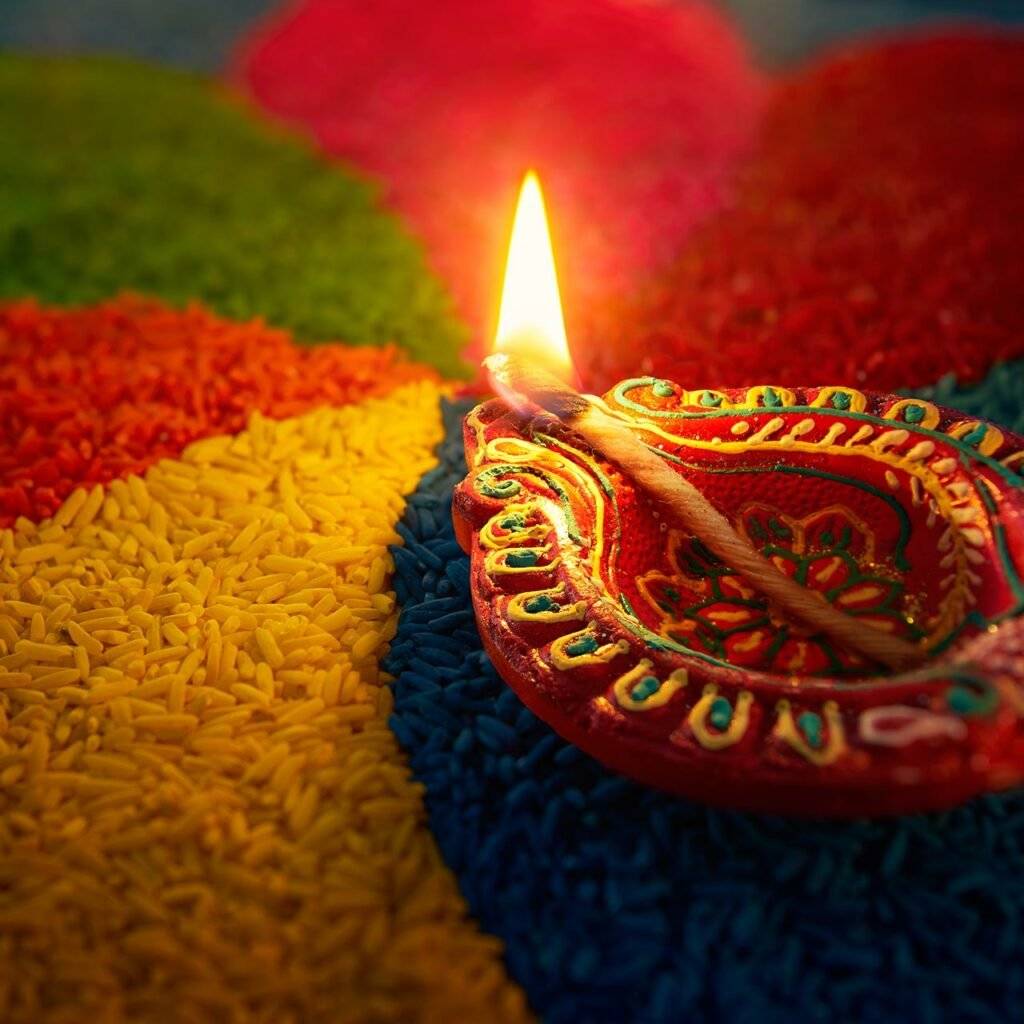
Lighting lamps is an integral part of Hindu festivals and rituals. In the month of Kartik, diyas (lamps) are lit. During Diwali, lighting lamps is an important ritual. The word “Diwali” is derived from the Sanskrit term Deepavali, meaning “row of lighted lamps.” On this day, Lord Ram returned to Ayodhya with his wife Sita and brother Lakshmana after 14 years in exile. Lamps were lit to celebrate his homecoming.
During Diwali, people light diyas and colorful lights at their homes, temples, and public spaces. Lamps are kept lit all night to welcome Goddess Lakshmi, who is worshipped for prosperity and wealth. Earthen lamps placed near the main entrance are considered auspicious and believed to please the Goddess.
Other festivals, such as Navaratri, Pongal, Rakshabandhan, and Dhanteras, also feature the use of lamps, symbolizing reverence and positivity.
Temples and Home Altars
In temples, lamps are lit during aartis as part of worship. At home, lamps are placed in the prayer room and lit during pujas (prayers). In some traditional households, a lamp may be kept burning continuously (akhanda jyoti) as part of rituals like Yajnas (sacrificial ceremonies conducted with fire and mantras).
Lamps are also lit near sacred plants, such as the Tulsi plant and Pipal tree. This creates a spiritual atmosphere and promotes gratitude toward nature.

Special Events
Lamp lighting is a common feature of ceremonies and events. Whether at school functions, business inaugurations, or professional gatherings, lighting a lamp is seen as a way to mark auspicious beginnings.
Guests of honor, such as wartime heroes or dignitaries, are often welcomed with a lamp-lighting ceremony. Similarly, personal celebrations like weddings, anniversaries, housewarming ceremonies, and other milestones often include the lighting of lamps to symbolize joy and prosperity.
Home Décor
In modern times, lamps and diyas have also become popular for decorative purposes. With their intricate designs, they create a warm and cozy ambiance. Lamps are used on dining tables, in pathways, and in outdoor spaces to enhance the beauty of homes while adding a touch of elegance.
Conclusion
Lighting a lamp is steeped in meaning, blending spiritual, cultural, and practical elements. It represents the triumph of knowledge over ignorance, selflessness, and the pursuit of spiritual growth. Whether used in religious ceremonies, festivals, or as decorative items, lamps inspire positivity and enlightenment in every aspect of life.