VIOLENCE AGAINST MINORITIES IN BANGLADESH
Author: Lea Kosovac
In August 2024, following a major political shift in Bangladesh, violence targeting minority communities surged. This wave of persecution has resulted in a grave humanitarian crisis. Bangladesh, once a beacon of liberation and inclusivity, is now witnessing disturbing levels of discrimination and violence. In the early 1970s, minorities made up a quarter of the population, but now, they represent less than 8%. The attacks against religious minorities, particularly Hindus, Buddhists, and Christians, are part of a systematic effort to erode their presence in the country. Forced conversions, destruction of homes and businesses, and brutal acts of violence are being carried out with alarming frequency. Despite these horrifying events, much of the violence is kept under wraps by strict media censorship, preventing the global community from fully understanding the scale of the crisis. This situation is not just a religious issue, but a serious human rights crisis that demands immediate attention. The Scope of the Violence Reports from several human rights groups, including the Hindu Buddhist Christian Unity Council, detail an unprecedented high level of violent events between August 4 and August 20, 2024. Over 2,000 events took place during this period, including 69 cases of vandalization and destruction of temples. Properties, including residential and commercial buildings, and places of worship, including Hindu and minority groups, have been specifically targeted and disproportionately victimized through these acts of brutality.
Thousands have been displaced, and family members have been forced out of their homes, living in constant fear for their lives and well-being. The level of devastation runs deeper than property loss—testimonies report that individuals, particularly women and children, have been subjected to horrible abuses, including rape, murder, and forced religious conversions. Most disturbing, several videos posted to social networks feature food being exchanged for conversion alone, a demonstration of the level of brutality visited upon minorities. The international community’s reaction has been slow in arriving. Amnesty International, an advocacy group for tracking worldwide human rights, urged Bangladesh’s government to act immediately in protecting its citizens, particularly minorities, and in taking a stand to defend its vulnerable citizens. Amnesty insists that the government must act to stop the violence and bring offenders to book, stating that failure will mean continued suffering and loss of life.
Role in Seeking Justice
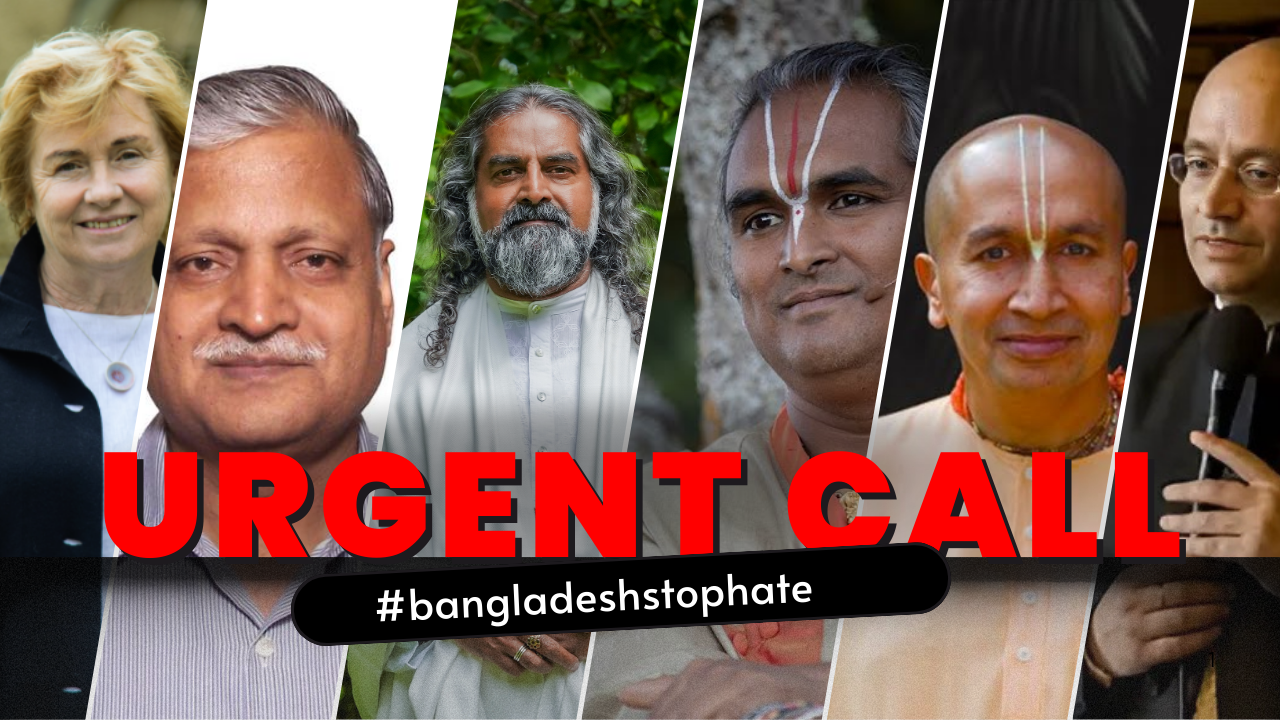
Mohanji has been a vocal critic of violence visited upon minorities in Bangladesh. He has espoused that it is a moral imperative to act against injustice wherever it rears its head, stating: “We must stand strong and speak out whenever adharma or unrighteousness happens. To witness injustice being perpetrated on innocent and powerless people is equivalent to committing a wrong.” In response to such reprehensible actions, religious leaders started a campaign titled #BangladeshStopHate to raise awareness at a worldwide level about the hardships of minorities in Bangladesh. The campaign aims to mobilize citizens, governments, and entities towards collective efforts that will ensure security for such vulnerable groups. Through such an awareness campaign, it aims to draw worldwide concern towards such critical conditions and seek intervention at an international level.
The Global Call for Action
Citizens of the world took a role in mobilization for the OM March in The Hague, an event in attendance of hundreds of followers of different faiths, who showed solidarity with Bangladesh’s victims of brutality. This demonstration underpinned both the efficacy of a collective voice and the imperative of speaking out for humanity, cutting through national and faith affiliations. The OM March in The Hague represented a powerful demonstration of solidarity and shared accountability. It delivered a powerful message to the worldwide community that complicity through inaction is no longer an acceptable position.
Activists, faith leaders, and concerned citizens who participated in the march underpinned with strong urgency the imperative for collaboration between the worldwide citizenry in a view to stopping brutality in Bangladesh and preventing victimization of its minorities in future. Human rights groups, such as Amnesty International, have reissued such an immediate appeal, urging governments worldwide to press Bangladesh’s leaders for accountability for brutality and for protecting minorities in Bangladesh’s country under its laws and conventions. U.S. Rep. Raja Krishnamoorthi, together with several other leaders, condemned such continued brutality, urging a strong reaction at an international level.
A Shared Responsibility
The persistent brutality in Bangladesh is a strong reflection of the fragile state of human rights in regions under political uncertainty. That such a critical point is reached creates an opportunity for the international community to move past current discord and work together towards protecting at-risk communities. As addressed in detail by Mohanji, inaction in the face of injustice is complicity in its continuance.
The #BangladeshStopHate campaign and the OM March mark a first step. Not only will these events seek to raise awareness, but work towards meaningful change, holding offenders accountable and offering real support to victims. Justice cannot simply be an ideal, but a necessity: a necessity for all persons, regardless of faith and ethnicity, to have their rights respected and guaranteed. The cause at its heart extends past minorities in Bangladesh and towards a larger work in humanity. Society cannot stand idly by in a world scarred with such brutality and bloodshed. Action must be taken immediately in an attempt to curb future atrocity and brutality.