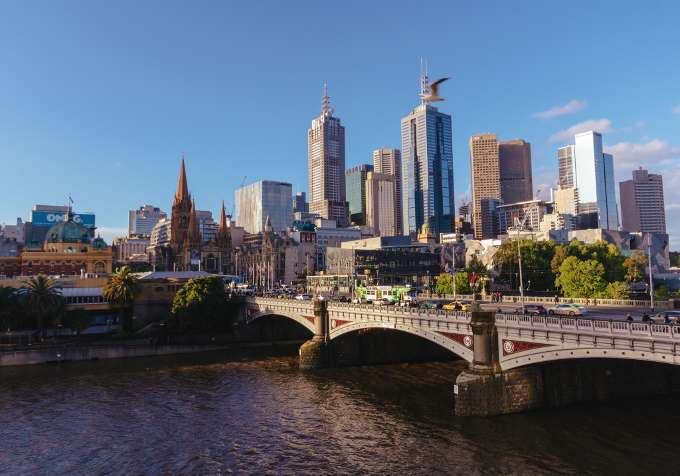
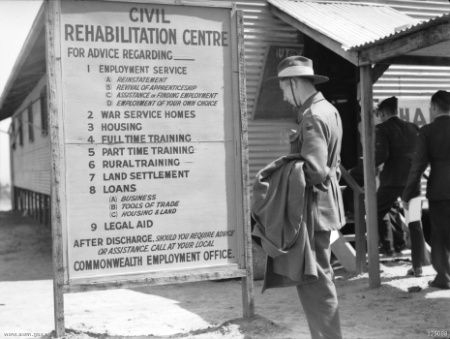
IF WE BELIEVE, with Herder, in the idea of a Zeitgeist, meaning a generalised description for the mood or tendency of an historical era, then it will come as no surprise that periods following from times of war are most often characterised by a need in people’s lives for a sense of peace, harmony and normalised living. A Zeitgeist of this type may be seen to have operated in Australia for the generation who experienced the horrors and disruption of both the First and the Second World Wars. Having lived through the disruptions and the horrors of world conflict, it is understandable that a post-war generation might desire above all a well-deserved period of physical and mental recuperation. If we combine this Zeitgeist with the often observed tendency of those sections of the middle class in Australian society with ample leisure time to engage in feats of self-betterment and the pursuit of ‘higher things’, then it might be said that we have a workable psycho-social explanation for the operation, during the 1940s and into the early 1950s of a Melbourne-based collective known as the Universal Science Group (USG). The surviving written records of this group have recently been donated to the State Library of Victoria.
The bulk of the collection was found in the archives of the Uniting Church in Melbourne, but little is known of how the material got there. It is possible that one of the group’s members ‘returned’ to a conventional religion after the USG disbanded around 1953. After having been delivered to the library in a number of old suitcases, the records were sorted and rehoused in sixteen archive boxes. Each box contains a number of manuscripts, now placed inside acid-free protective envelopes. Most items are bound memo books, often with individual loose pages tipped in. Some material is typed, often on loose pages originally held together with a steel pin (since removed for conservation reasons) in the top left corner.
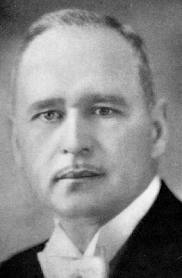 The Universal Science Group was a small and dedicated group of friends and associates who met regularly to follow a course of alternative spiritual learning and healing based on the teachings of Dr Murdo MacDonald-Bayne (1887–1955), a Scottish lecturer and author who founded the College of Universal Science in Manchester during the 1930s and who spread his teachings with visits to, and residences in, various European and Commonwealth countries, including India, South Africa, Canada and Australia.
The keynote for MacDonald-Bayne’s teaching and the meetings of the USG at this time was to study principles for the solution of personal problems and for world reconstructed following the ravages of war, with its attendant disruption of personal integrity and social cohesion. In the words of an address delivered to one of MacDonald-Bayne’s groups in July of 1947, ‘not only are the nations turned against each other, but every individual is full of antagonism . . . Mankind is virtually committing suicide’.
Luckily, hope was at hand, and it was the mission of MacDonald-Bayne and his followers to provide this hope. They offered a message that was rooted in particular historical circumstances but which (they felt) was relevant to the human condition no matter what the era. The records of this group offer a fascinating insight into an alternative self-help organisation whose activities paralleled, but did not cross, the spiritual teachings of the mainstream churches and other self-improvement societies of the time.
Murdo MacDonald-Bayne was an interesting man with a very particular caste of mind. He was born near Perthshire, Scotland, in 1887, making him a late Victorian and heir to an era that produced great scientific progress and raised great debate as to the changing status of established religion and orthodox belief. He was a sensitive and delicate child who grew up within the confines of a strictly religious family. At an early age he reported unusual psychic experiences, including a vision of Christ on a window pane and, later, hearing and seeing things not experienced by others, and an ability to somehow ‘float’ on air, all experiences which he later sought to explain in his study of Eastern yoga. He commenced mainstream medical studies but found himself out of sympathy with the attitudes and techniques he was being taught, claiming on one account that he found his studies ‘too materialistic’ and he was said to prefer more ‘natural’ methods of healing.
He married in 1913 and two sons were born. He enrolled in the Highland Light Infantry during World War I, serving initially as a piper and later as a commissioned officer in France. He suffered a near-death experience when he was badly wounded and left for dead, being later discovered to be alive after a number of days in the open. He recovered from his wounds and finished the war in the Near East. He was demobilised in 1920 and initially took his family to Australia and then to New Zealand, but the children returned to Britain with his wife to pursue their education while he toured many countries as a lecturer on religion, spirituality and methods of healing. His healing techniques at this time may best be said to be based on psychological states of mind, such as visualisation and positive thinking, together with the pursuit of a healthy lifestyle. Details of his methods may be found in a number of books which he published around this time.
Returning to England, he founded the College of Universal Science in Manchester some time in the early 1930s, where he continued to teach natural health and metaphysics, but continued to travel the world, teaching and lecturing. He was in Australia during 1931, and lectured on a range of topics.
Whilst in Australia he formed a relationship with Charles Bailey, the well-known Australian spiritualist medium, and worked with him both in Australia and in Manchester.
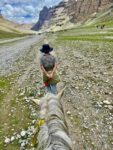
He was ‘called’ to South Africa some time in the late 1930s and left for Johannesburg with his sister, where he lectured on spiritual topics, later starting a Healing Centre in Cape Town. From here he was again ‘called’, this time to Tibet, where he travelled extensively through what was then rugged and fairly inaccessible terrain, visiting a number of monasteries and meeting many religious teachers, whose methods of Eastern philosophy he studied. He wrote an account of his travels in two books and claimed to have mastered yogic techniques such as breath control and meditation, as well as a certain number of more controversial powers such as telepathy and out-of-body experiences. It is obvious from his lectures and published work after this time that the Tibetan experience had had a profound effect on his view of the world, his views on the nature of God and on his methods of spiritual and physical healing.
More travel to various Commonwealth countries and the USA followed, where his teaching and healing continued, including time in Melbourne, where he lectured on his experiences in Tibet, under the title, ‘Mysterious Tibet – two illustrated talks in natural colours by Murdo MacDonald-Bayne’.
Although no confirmation exists, this appears to be the time when he made contact with a group of Melbourne followers, including Joy Hall, who later went on to form the nucleus of the USG. He returned to South Africa and became a regular lecturer to moderately large audiences in Johannesburg and Pretoria, further developing his healing and writing activities. Various records of his lectures from this period remain, both as student lecture notes and on wire recordings (before the widespread use of magnetic tape). Many of these lectures have recently been reprinted and made available for distribution. MacDonald-Bayne was said to cut a charismatic presence in front of his audience. He himself claimed to lecture with divine assistance. At this time, he founded his College of Universal Science in South Africa and his healing ‘Sanctuary’. From the Sanctuary arose the regular monthly letters which he wrote for world-wide distribution to his followers and these, too, have recently been collected and published by his latter-day followers.
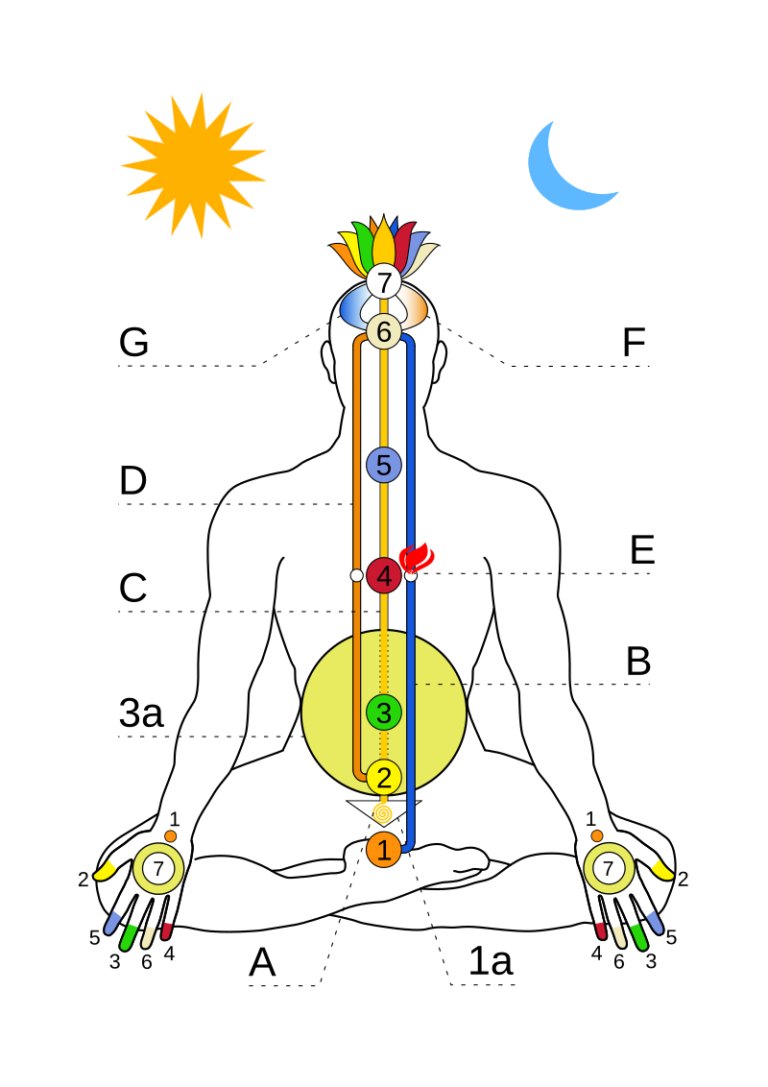
Although certainly charismatic, MacDonald-Bayne was probably never what you might call a ‘crank’. He comes across in his writings and lectures as a sincere seeker after spiritual enlightenment and as sufficiently down-to-earth, never to claim divine or even guru status, preferring to offer what he termed ‘impersonal direction’ to his followers, by which he meant that he wished to avoid elevated status in their eyes and to remain a mere conduit for the transmission of eternal truths. Even if his opinions on the non-physical world sometimes stretch credibility, with their extended spiritual realms, their angels and ‘masters’, their mediumship, astral planes and more than occasional touches of Eastern esoterica, he was said to be approachable and good humoured, and to be generally relaxed in his attitude to life, although quite forceful when he lectured.
He died in London of a heart attack, having returned there to see his family in 1955, but left an adoring company of followers who always lauded him as a great healer and spiritual teacher, even if, on occasions, their admiration veered somewhat towards the hagiographic.
Excerpt from the article Rebuilding the Future: the Universal Science Group in Post-War Melbourne
Author: Chris Elmore
Source: State Library Victoria, www3.slv.vic.gov.au