Author: Lea Kosovac
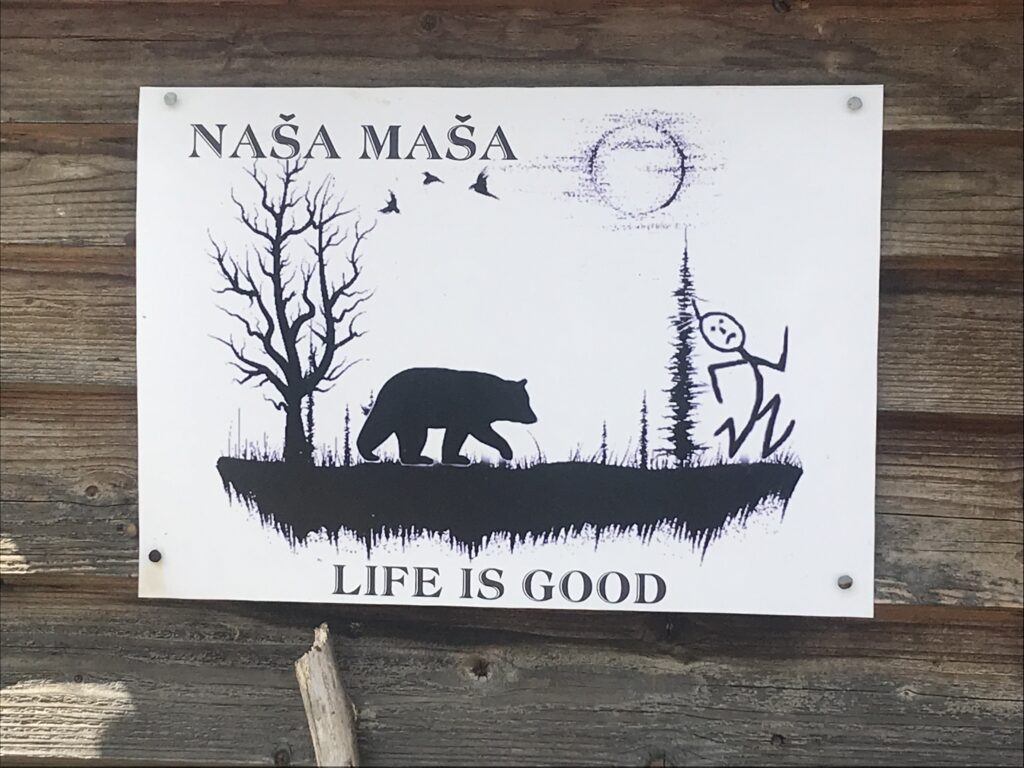
While the title may evoke memories of the beloved cartoon “Masha and the Bear,” this story diverges from that narrative. Instead, it introduces us to Maša, not the mischievous girl, but a bear, her metaphorical sister Ljubica, and Vuk, an actual wolf. I encountered them through a video by the renowned BIH vlogger Robert Dacešin, atop Mount Ozren, within the Paragliding Club Paraghost. Here is the interview with the owner, Petar Tubić.
The Awakening Times (TAT): It’s certainly an unusual situation to have two bears and a range of other animals residing in a paragliding club. Could you tell us how it all began?
Petar Tubić (PT): It all started with Maša, the senior bear who’s now five years old. I received a call from a friend who mentioned hearing a bear cub’s cries in the nearby forest, just across from our center, for several days. It’s a distinct sound, one that signifies a distressed cub. I immediately understood the situation. I knew hunters had taken down the mother bear, leaving the cub abandoned. The friend who called knew of my affinity for animals and hoped I could do something to assist. Typically, in such scenarios, you refrain from interference and allow nature to take its course. But how can one ignore the cries of a helpless cub? I didn’t hesitate. I hopped into my truck and headed to the area where the cries emanated from. After a bit of searching, I stumbled upon Maša. She was barely a month old at the time. Frankly, I had never anticipated or planned for anything like this. Maša simply became a part of my life. I had no idea how to care for a bear cub, let alone a fully-grown bear. It’s been quite the journey.
TAT: You have two female bears. Are they sisters?
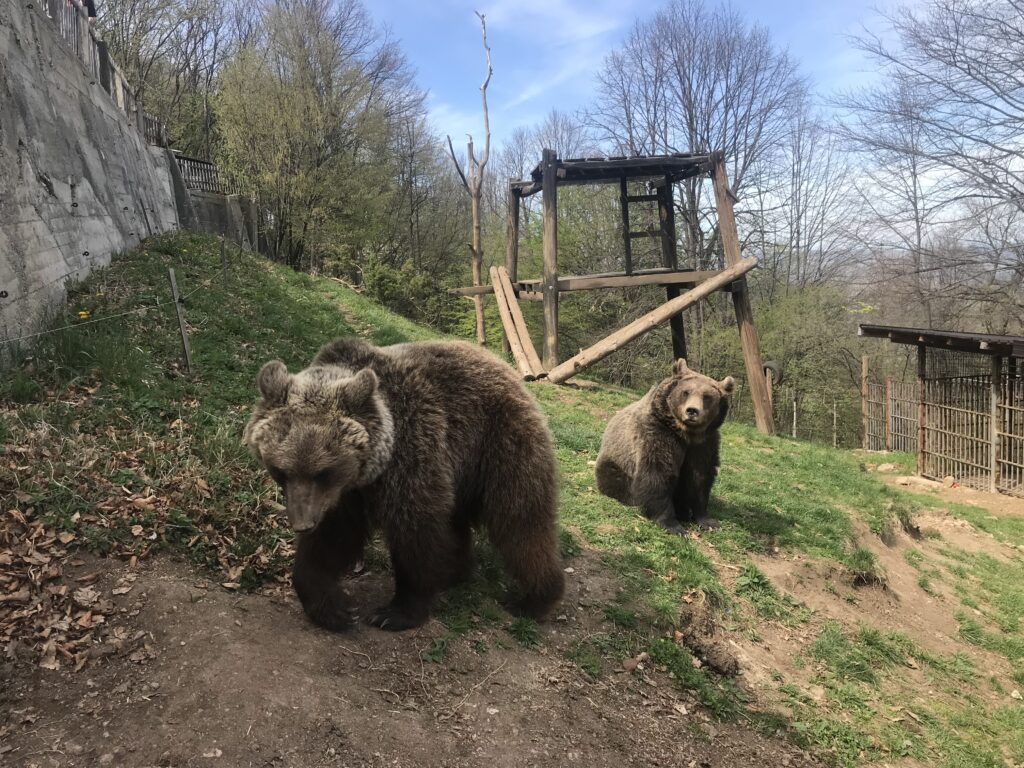
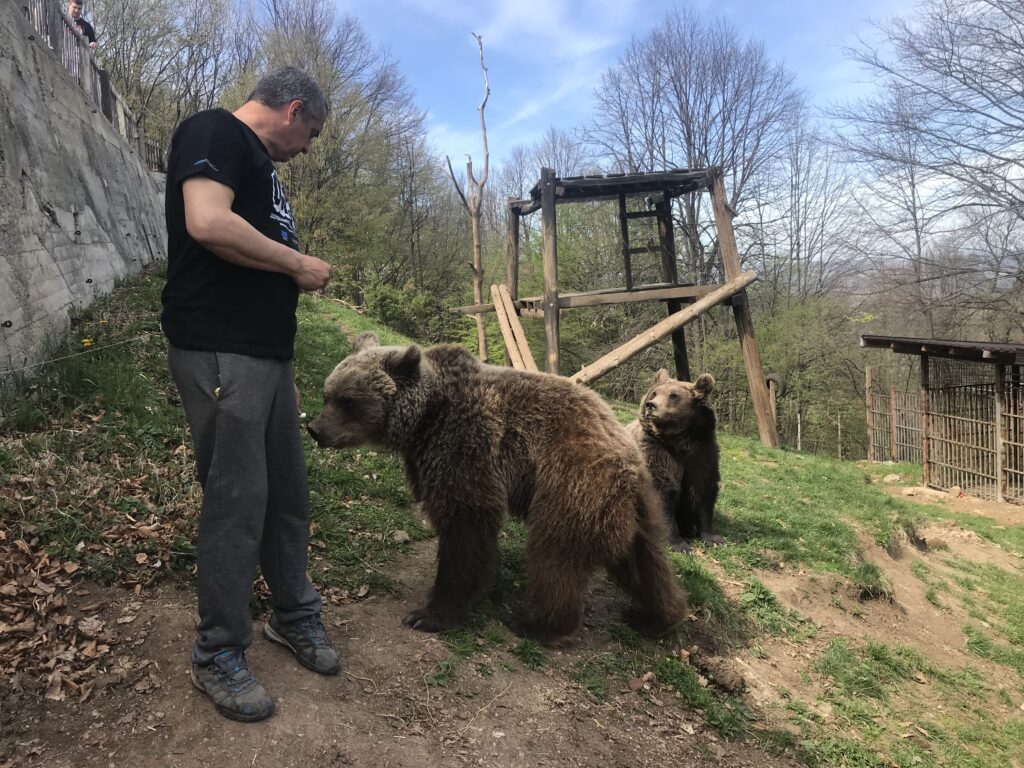
PT: No, Maša and Ljubica aren’t siblings. Ljubica joined us a year later. It was a similar situation; people reached out when they found Ljubica, knowing I was already caring for a bear cub and hoping I’d take on another. I pondered it for a while because, after a year with Maša, I understood the immense responsibility and commitment it entailed. However, in the end, the notion that “if I can care for one bear, I can care for two” won out. So, that’s how Ljubica came into our lives. Interestingly, she was named after the woman who cared for her before she came to us. When she arrived, the biggest challenge was how they’d interact, so we took it step by step. We placed them in adjacent enclosures to facilitate initial contact, and over time, they grew accustomed to one another. When we eventually introduced them, it was love at first sight. They immediately started playing and chasing each other, as if they’d known each other for ages.
TAT: Describe their personalities.
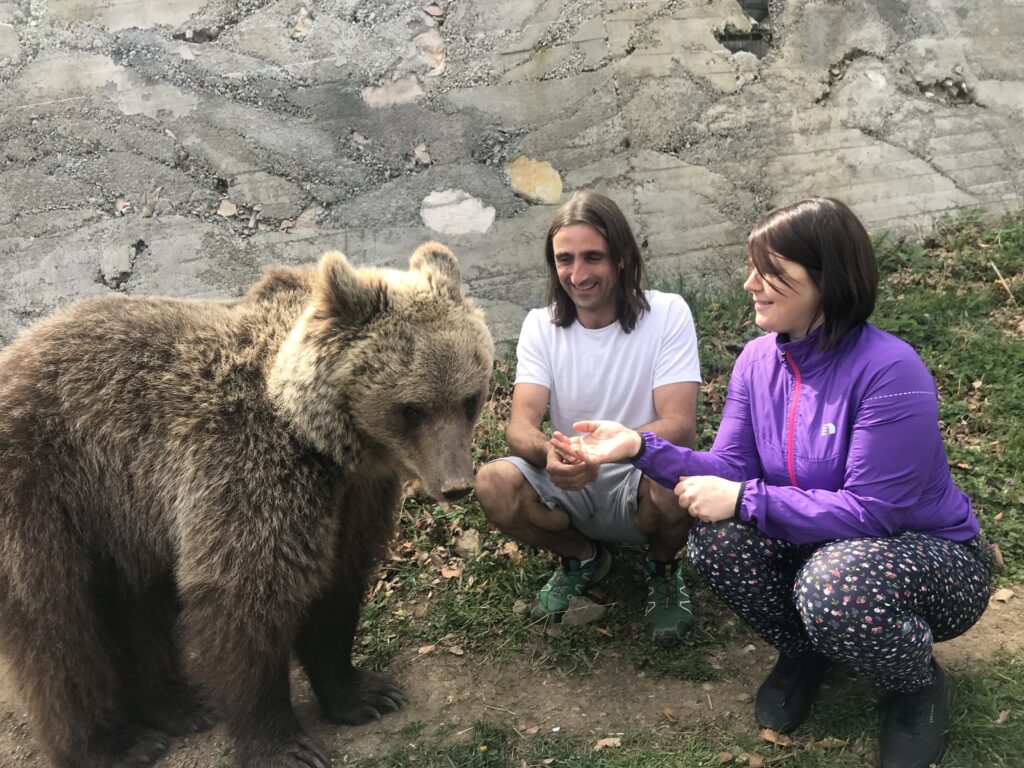
PT: You’ll see later when you meet them, they’re quite distinct. Like children in a family, one is more introverted, while the other is curious and loves to engage with everyone. For instance, Maša tends to be reserved and isn’t keen on socializing with strangers, whereas Ljubica is quite the opposite; she’s sociable, adventurous, and eager to make new acquaintances. She’s just open-hearted and would do anything for some company and a treat. As for their fur, you’ll notice they have different characteristics; both are Brown Bears, but they originate from different regions, resulting in one being more robust while the other is slimmer, with one boasting golden fur and the other silver.
To truly understand them, you’d need to spend time here with them. Then you’d realize that Maša has a lovely nature; she just requires time to build trust and relax in someone’s presence.
TAT: At first glance, this place appears to be a genuine sanctuary, where everyone coexists in harmony. Were there any challenges? What was the toughest part for you?
PT: There’s nothing overly challenging about it; it’s all about acceptance. I never envisioned myself caring for wild animals, but circumstances led me here, and I embraced it. Challenges do arise, but we tackle them as they come, and everything tends to flow naturally.
Our primary concern was providing adequate space for all the animals, ensuring their comfort and security. As you can see, the space is still undergoing development, and come summer, we plan to expand Maša’s and Ljubica’s areas. We aim to construct a pool and a pond for them to enjoy. We’re envisioning a space spanning several thousand square meters. During the off-season when guests aren’t around, we allow them access to the lower pool. For winter, they have their built-in huts, but they occasionally opt to create their dens. With winters becoming milder and a steady food supply, they hibernate less. Or rather, their hibernation patterns have shifted. Lately, they’ve been retreating to the huts, spending days gathering leaves and branches to fashion cozy beds for themselves. They do it so skillfully that it almost tempts me to join them. Bears are incredibly versatile creatures; they excel at swimming, outrun any of our dogs (laughs), climb trees, dig tunnels… They’re remarkably resourceful. When they play with our dogs, they often playfully “put them in their place” with a swift swipe of their paws, asserting their dominance.
TAT: We assume that all the animals receive veterinary care as much as possible, considering not all veterinarians have had the opportunity to encounter bears.
PT: Of course. The vet is often here, and the diet for Maša and Ljubica is planned exclusively in collaboration with him. But you’re right; not every veterinarian has had the chance to encounter bears. Let me give you an example. Look at our environment. We’re at the top of the mountain, and it’s normal to have vipers here. Every time I find them, I catch them and move them a few hundred meters away, onto the rocks, to protect my animals. One summer, Maša was at the pool. I was watching her from above, hoping she wouldn’t go to those rocks, but she started playing, running around and went straight to the rocks. In an instant, I heard a squeak, and I knew she had been bitten by a viper. She barely made it to her shelter and withdrew inside. I think that was one of the hardest moments in my life. I immediately called the vet; he came, but he wasn’t sure what to do. We didn’t know if bears could receive antivenom, or how it would affect them. I panicked and started searching the internet. Of course, I found nothing. I called all the experts in the region and beyond; no one had a similar case. No one knew what to do in that situation. I was in a panic. I don’t know what I would do if something happened to my Maša. Searching the internet, I found a study by some expert, in English. The only paper on the topic. I read it like crazy, and in the end, I came across the sentence, “European bears are resistant to the bite of European venomous snakes.” My heart opened. The vet who visited cleaned her wound and gave her anti infection shot; we couldn’t do anything else at the moment. Luckily, Maša fully recovered after a few days. There are very few studies on this topic, even worldwide. Let me tell you something else. One year, a famous professor, a doctor, an expert in bears from America, contacted me. He was in the region and heard about Maša and Ljubica and wanted to stop by to take their DNA samples for the archive. I was honestly excited, thinking I would finally have someone to learn from. I couldn’t wait to ask him a thousand questions that I already had in mind. When he came and did what he had to, the opposite happened; we ended up sitting here for hours while he asked me questions. In the end, I even told him that I hoped to learn something from him and had been waiting with questions, but he explained to me that his contact with bears always involved them being sedated. And that he had never had the opportunity to spend time with them. That’s why my experience was valuable to him because it’s extremely rare. I see my animals as my family, and I treat them all that way.
TAT: Tell us about other animals, what kinds live here?
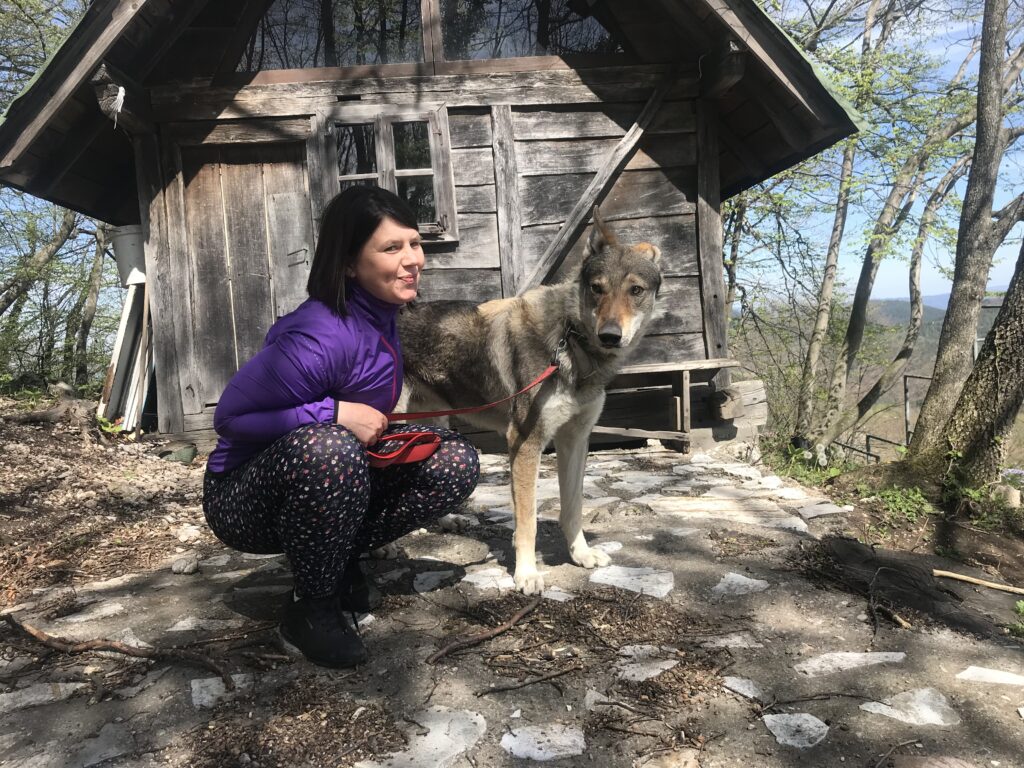
PT: First of all, there’s Vuk (a wolf). He’s exceptional. I got him as a gift. And by the way, I had another wolf before him. He’s amazing. We’ve been together for a long time, and we’re very attached. When there aren’t many people around, he’s released and roams around. He loves playing with our dogs, loves teasing them. Besides him, there’s the donkey Rodoljub. He’s quite a pain (laughter); he loves visiting guests peeking into their bags and rummaging through things. Of course, there are our dogs, cats, goats, chickens, Franz-the llama, oh, he’s a special story. We got him from an older couple who couldn’t take care of him anymore. And recently, we got a raccoon. Since I work as a paragliding instructor, many people in the area know me. That’s how animals end up with me. For example, for Rodoljub, villagers from a nearby village called me to say an exhausted donkey was wandering the streets. I packed up and went to get him. You’ll see later when everyone gathers; there’s no tension. All the animals and all of us here live in harmony. No one harasses anyone because everyone is fed and taken care of. You will see the same happening in nature, no animal will attack another unless it’s hungry. Besides the ones I’ve mentioned, who live here, I have 35 deer. And that’s an incredible story that just came to me. A neighbor had a ranch, down there, where he kept these deer. From time to time, he brought hunters to shoot them, in that fenced ranch. Of course, that couldn’t go on, so everything started falling apart. When he saw he couldn’t handle everything anymore, he called me and suggested I buy it. I bought those few hectares and all those deer. Since no one had been adequately taking care of them, they bred among themselves, so sick individuals were born. It took me some time to sort it all out. But we managed. I had the city’s support to help with infrastructure development. Little by little, everything fell into place. Today, it’s a reserve and one of the favorite weekend destinations for citizens from the surrounding area.
TAT: Do you have a message for our readers in conclusion?
PT: Everything you see here, this restaurant, and this whole complex, it’s all built for them, and it’s all theirs. When all their expenses are covered, if something is left for us, good, if not, still good. They are the priority. Especially Maša and Ljubica because they will outlive me. In optimal conditions, such as those provided here with healthcare and abundant food, bears can thrive for 40-50 years. Which means I have to ensure their future. Bears, and any other wild animal, raised in this way, cannot be returned to nature, because it would be fatal for them. So, my role is to make sure that even after my death, Maša and Ljubica live well. Some people believe they should be where they belong, in nature. But that simply isn’t possible. Especially in this part of the world. So, obligation and my task are, as long as I’m alive, to do everything possible to ensure they have a dignified old age. And that’s also my only goal.
People are diverse; some come here just to take pictures. Such times have come; we do everything for likes. However, there are rules here, and they must be respected. We must learn how to treat animals, the environment, the planet. We must not take things for granted. Recently, a girl came to me and begged me to take her to meet Ljubica and Maša. I told her she could, but only when they wake up. We follow their rhythm here. She didn’t like that because she was in a hurry. I caught her from a distance throwing a pear at them to wake them up. I don’t tolerate such behavior, and I had to kick her out of the complex. So, everything depends on our relationship with nature, animals, plants… We must be aware of this. We must change the way we treat the life around us.
TAT: Thank you for your time, but also for your effort and dedication. This place is indeed a true paradise for everyone.
PT: It was my pleasure.
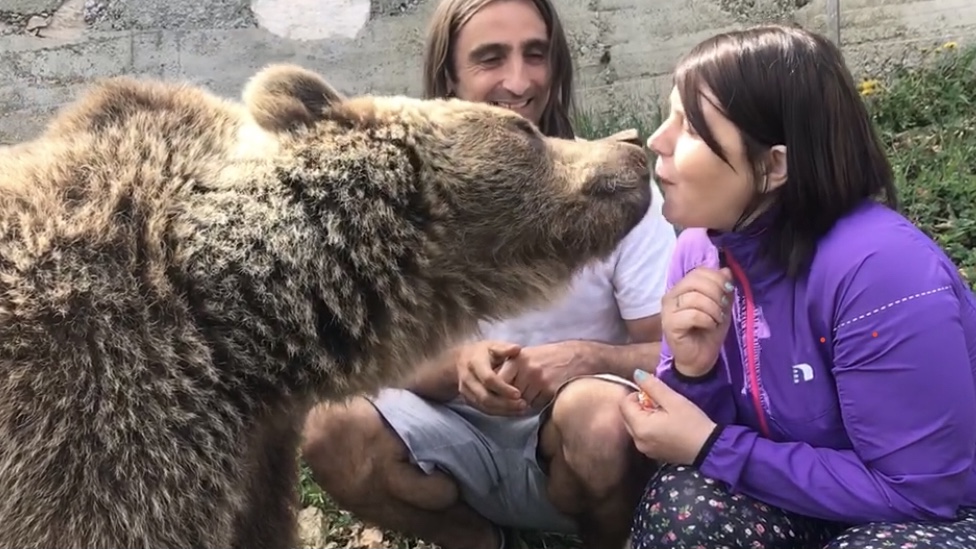
If you find yourself passing by this route, I highly recommend paying a visit. And remember, in Bosnia, we don’t show up empty-handed. Bring along some fruits, veggies, nuts, grains, or high-quality pet food. And if your budget allows, bring plenty – feeding all these animals takes a village.