Written by Sweety Vyas
It was the time of the annual festival. Many people were gathered together in the temple of Anantheshwara in Udupi. One of the priests climbed the flag post that was in front of the temple. The crowd gathered around him in amazement. The priest declared, “Lord Vayu, the son of Vishnu will soon be born among us to revive the Vedic Dharma.”
Soon a son was born to Narayana Bhat and his wife, who had been present at the time of the man’s declaration. The birth took place at Pajakashetra near Udupi in the state of Karnataka on the holy occasion of Dussehra. The year was 1238. They named the boy Vāsudeva.
When Vāsudeva was less than a year old, his mother left him with his sister and went out for some work. The child was hungry and started crying. Not knowing what to do, the sister fed him with boiled horse-gram which was fed to bullocks. Vāsudeva ate a large quantity and relished eating it. When his mother returned, she was very worried when she heard that he had eaten so much horse-gram. This was difficult for even an adult to digest. But the child seemed happy and healthy. His extraordinary digestive power surprised everyone.
Once when Vāsudeva was just 3 years old, he could not be found anywhere. The anxious father went out looking for him everywhere. He went as far as Ananteshwara temple and finally found the little boy in the temple praying. He enquired from his son, “Who brought you here?” The son replied that the Lord Himself took him by the hand and brought him there. The worried father did not take his son’s words seriously.
Two years later, his mother took him to attend a religious discourse. The child pointed out that the meaning was not being described properly and explained the correct interpretation. His great spiritual insight and courage to point out wrongs was admired.
There were also miraculous powers that were attributed to him. One day, the child noticed that his father was worried. He owed Kakra Shetty money. Later on, the boy met Kakra Shetty at the door who informed him that he had come to collect the money. The boy went to the garden. He picked up a few tamarind seeds. He placed them on Kakra Shetty’s palms. The tamarind seeds turned into gold and the creditor received more money than had been due.
Vāsudeva was sent for his formal education to the Gurukula (home of the teacher where students stayed and are taught) of Totantillaya. He excelled in his Vedic studies. After finishing his education, Vāsudeva decided that he would become an ascetic. He would learn the scriptures and then explain them to others. He told his parents of his intention of renouncing the world. His parents were distraught. He was their only son. They wanted him to marry and continue the lineage. Vāsudeva told them that he had made up his mind but that he would wait until another son was born. Soon a son was born to his parents. Vāsudeva took the blessings of his parents and left.
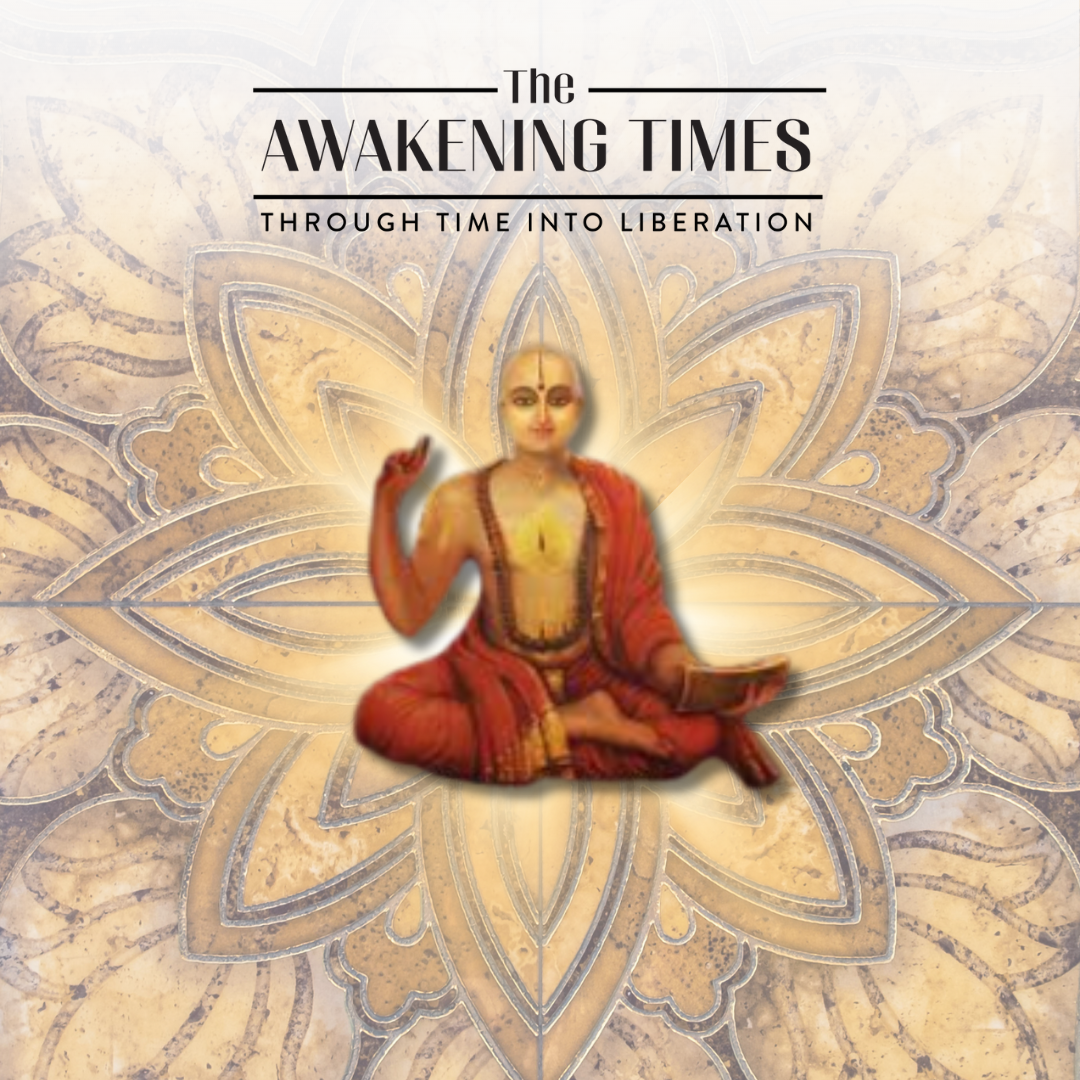
A sanyasi named Achyuta Prajna ordained Vāsudeva. He was then known as Pūrnaprajña. He was initiated into sannyasa as a teenager. His guru was amazed when the young boy raised important questions which even he could not answer. Pūrnaprajña was known for his intellect. Some visiting scholars fled rather than debate with him. This made his guru very proud of his achievements. He made him his successor and gave him the name of Anandatirtha.
Later, he started being known as Madhvacharya. He gave discourses to large audiences. He also began writing his commentary on the Bhagavad Gita. He went to South India on a pilgrimage and went to important places such as Srirangam and Kanyakumari. Many people became his followers. After completing his commentary on the Bhagavad Gita, he decided to go to Badri. There he dedicated his work to Lord Badri Narayan.
Vāsudeva then took a vow of silence and resolved to meet Ved Vyasa. Forty-eight days later, Ved Vyasa called him to Uttara Badri and met him at his ashram. For months, he received knowledge from Ved Vyasa. Then he was ordered to go back and do his work. Madhvacharya went back to Badri and wrote a commentary on the Brahma Sutras.
Madhvacharya then set off to Udupi. He established the famous Krishna temple in Udupi. There is a famous story of how he obtained the idol. When he was in Udupi, Madhvacharya used to go to meditate on the sea-shore. One day, he noticed that a ship was in danger of being tossed away by the turbulent sea. Water was entering the sea and it was sinking. Madhvacharya took a part of his saffron robe and waved it in the ship’s direction. Miraculously, the sinking ship was drawn safely to the shore. The captain of the ship was relieved. He informed Mardhvacharya that they were from Dwarka. He offered him a gift to express his gratitude. On the captain’s insistence, Madhvacharya agreed to accept some Gopi Chandan (yellow in color and considered holy, earth from Dwaraka). He took a huge block of Gopichandana which had been acting as ballast for the ship. He carried it from the shore to Anantheshwara temple. He immersed it in the temple tank. Suddenly a very beautiful idol of Lord Krishna in His child form came out.
There is a famous story of the origin of this idol. Rukmini, the wife of Krishna, once requested the Lord for the Balkrishna idol, which is the child form of Lord Krishna. This idol was created by Vishwakarma with a Saligrama stone on Lord Krishna’s order. This was then given to Rukmini to worship in Dwarka. This idol was completely covered with sandalwood paste by devotees. When there was a flood in Dwarka, the sandalwood covered deity was washed away. Decades later, a sailor found a hard rock and began using it to balance his ship. This was the idol that Madhvacharya received. He realized that Rukmini had previously worshiped this idol. He was filled with bliss.
He consecrated the idol in a temple which is now one of the most famous Krishna temples in India. Today it is one of the holiest pilgrimage sites in South India. He personally worshiped the idol for twenty years. He set up a very strict procedure for temple worship in Udupi which is famous till today. He set up eight mathas (monasteries) around the temple. These eight mathas administered the temple for two months each. Later on, this was changed to two years each. This rotational system continues till now.
Madhvacharya was against animal violence. At that time, there was the practice of killing animals for rituals. When his brother discussed this with him, he suggested that images made of flour should be used in place of real animals. His brother followed his advice. Initially he was opposed by orthodox Brahmans. Later on, many were convinced to abandon this cruel practice.
Madhvacharya was known for his physical strength also. Once he fought two famous wrestlers. He told them that he would chant the name of Lord Vishnu, and if they could strangle him, he would accept defeat. The wrestlers tried hard but could not succeed. They then had to accept defeat. To spread his message, he went to North India. He gained many followers in Kashi, Puri and Gaya. Then he finally returned to South India.
Madhvacharya believed in selfless action and loving devotion to God. According to him, the world was not an illusion because the Creator had created it. He debated many famous scholars. One scholar argued that action should be given up as it creates a repeated cycle of birth and death. Madhvacharya explained that action should not be renounced, but the fruits of action should be given up. He preached that the only independent reality is God. Individuals are dependent upon Him. By the Lord’s grace and loving devotion by the devotee, salvation is attained. He stressed on constantly remembering God. According to him, “Form a strong habit of remembering God. Only then it will be easy for you to remember Him at the moment of death.” Madhvacharya advanced the Vedanta philosophy. The name Dvaita (dualism) Vedanta or Tattvavāda is given to his philosophy. He was a religious reformer and was against blind faith. He was also a prolific writer. He wrote in Sanskrit. His works include commentaries on Vedas, Brahma Sutra, Upanishads, Bhagavad Gita and several other works. He also wrote devotional hymns. He is credited with writing forty works. Thirty-seven of these are commonly known and are known as Sarvamoola Granthas. Madhvacharya was one of the greatest spiritual teachers of India. His philosophy and writings have made him famous.
Sources
- Evolution of Theism by Swami B.G.Narasingha
- Beginner’s Guide to Sri Madhavacharya’s Life and Philosophy – Published by Vishwa Madhva Sangha
- https://anandsp1.files.wordpress.com/2020/04/madhvacharya.pdf