Author: Bhavani Nair
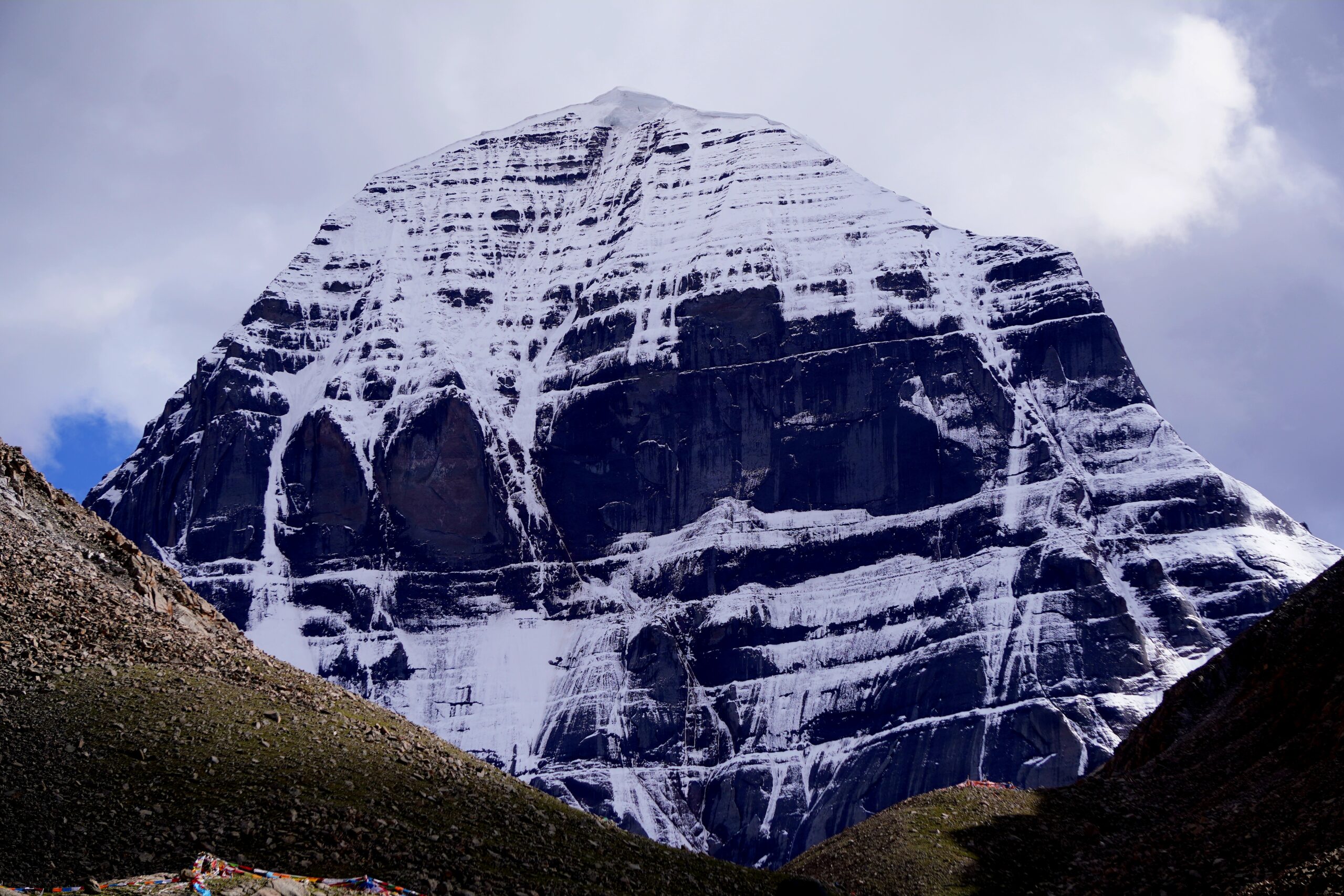
Kailash, the enigmatic and mighty mountain of Tibet, stands apart in its grandeur. Many in the world are unaware of its existence. Only those destined to hear its call are drawn to it, and only a fortunate few are blessed to walk around its sacred surroundings. With stark beauty and an overwhelming presence, Kailash is unlike any other mountain range on Earth.
Many believe it to be a hollow structure inhabited by great masters, making it impossible to climb. Till today, no one has reached its summit, and it is not permitted. Kailash is sacred; its center can only be entered in subtle form, never by the mortal body. What is allowed, however, is the parikrama—circumambulation of this holy mountain.
Each year, countless seekers undertake this arduous pilgrimage to fulfill their life’s dream of reaching the abode of Lord Shiva. Yet very few truly understand its significance. With Mohanji’s grace and living presence, we are now closer than ever to experiencing Kailash, not just as a physical journey but as a profound inner connection with its energy.
Mohanji explains: “Kailash represents the highest aspiration of a human being—the deepest desire to return home to our true self, rooted in stillness and silence. Everything emerges from silence, and the ultimate yearning of every soul is to return to that original state—the Silence of Shiva.”
How fortunate we are to have a living Master who walks with us, who reveals such profound truths that might otherwise take lifetimes to hear, comprehend, and realize. With grace alone can we aspire to reach the state of Shiva.
The Unique Experience of Kailash
Kailash cannot be described by one person or through one experience. It unfolds uniquely to each pilgrim, speaking loudly to some, whispering silently to others. But one thing remains unchanged: no one who encounters Kailash remains the same. Its grace transforms from within, often quietly, over time.
For many, it becomes an irresistible pull, like a beacon to the soul. Pilgrims keep returning, unable to resist the call. I have been blessed to walk this sacred land five times, and each journey has gifted me more than I could comprehend. The hardships—hypoxia, exhaustion, and extreme conditions—fade from memory, just like a mother forgets the pains of labor once the child is born. Each parikrama feels like being reborn, with all struggles forgotten in the radiance of its grace.
The Pilgrimage Path
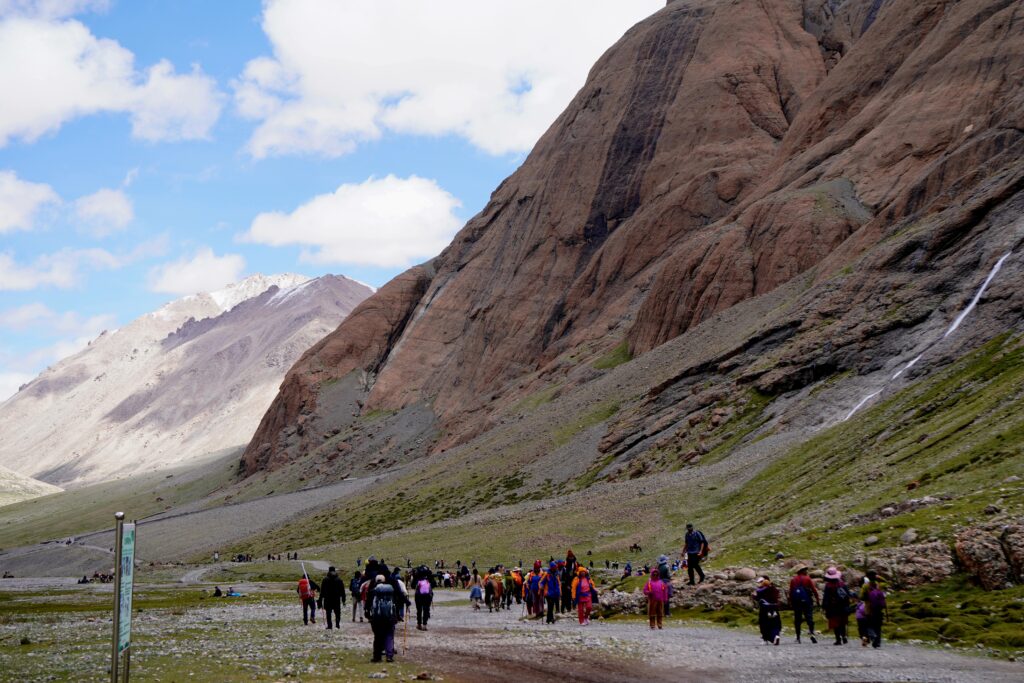
The Kailash journey spans many days—long bus rides, the Mansarovar parikrama, and finally the circumambulation of the mountain itself.
Day 1 – The Beginning at Yam Dwar
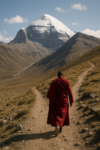
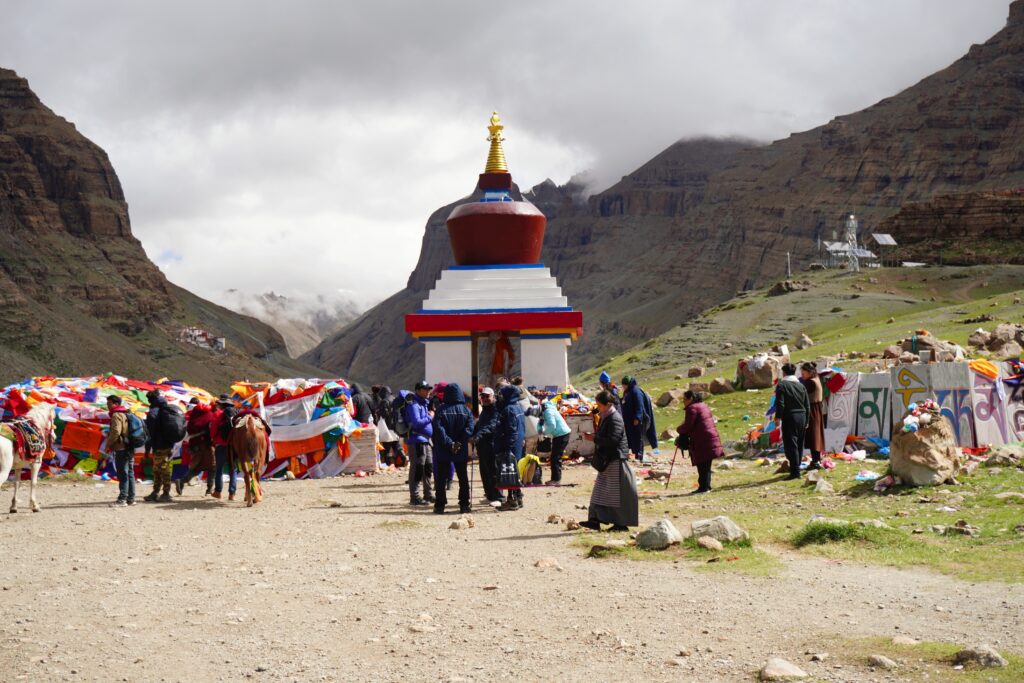
The journey starts at Yam Dwar, the “Gate of Death.” Here, pilgrims symbolically leave behind the old self—attachments, patterns, and burdens—and step forward renewed. The 10 km walk to Diraphuk begins with landscapes of vast valleys, waterfalls, streams, and the sound of Tibetans singing. Pilgrims are welcomed by the divine darshan of the West Face, and by evening, they arrive at the North Face, the most majestic face of Kailash. Stark black stone crowned with snow glows golden in the setting sun. Many people see shapes, faces, and eyes in the mix of stone and snow. Natural surrenders take over as the magnitude of the silence, and subtle presence is felt. By evening, as the sun sets and the mountain often glimmers in the golden glow, you can hear the wind blowing and the evening cooling down to the low temperatures of the night. The recognition of this wonderful spectacle brings tears to many, and often, there is a deep shift within.
Day 2 – The Ascent to Dolma La Pass
The second day is the most difficult, reaching 5,630 meters (18,471 feet). This is the most challenging part of the journey, as it is a difficult ascent and low oxygen levels. Every few steps require a short break to catch your breath. Some of the terrain is very steep, and some ponies often rush by you as well, not to mention loose gravel. Yet, reaching this high point is transformational. Just beyond lies Gauri Kund, the pond where the Divine Mother is believed to bathe. It is around 400 – 500 meters (1,300 – 1,600 feet) down from Dolma La Pass. Many are too exhausted to venture down, but those whom Mother calls take the journey down to seek her blessings. Protected by nature, it is said to hold the purest water on Earth. I was blessed to go down twice, and though the climb back was grueling, the sweetness of Mother’s grace made it unforgettable.
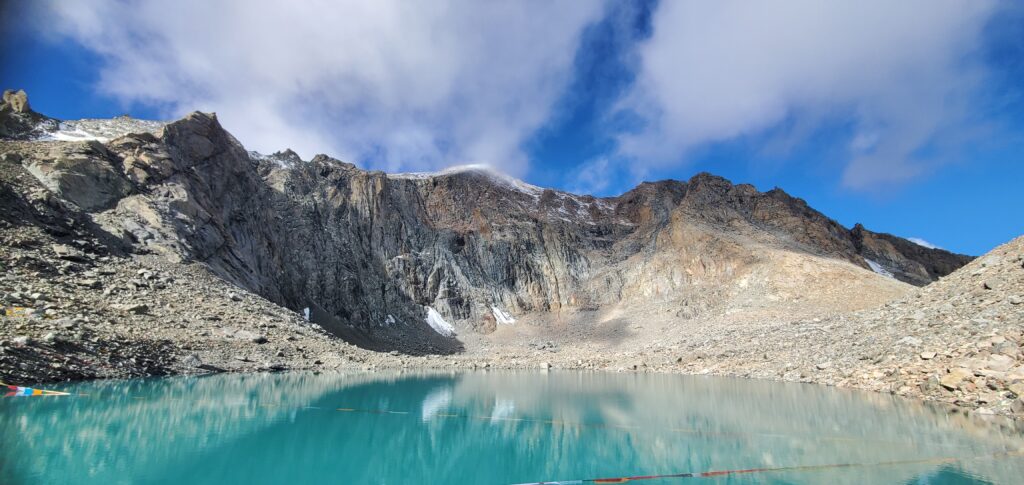
From Dolma La, the journey continues 13 km to Zhuthulphuk, through barren and seemingly endless land. Part of this trek has to be walked down without any assistance from a pony. Once on the flat ground, pony’s assistance is available as the pilgrims walk the last leg to the rest stop. If lucky, there is a small glimpse of the North Face peeking through as giving the last of his blessings to walk the path filled with uncertainty. This stretch challenges both body and mind—fatigue forces deep contemplation, silence, or surrender. Each pilgrim receives what Lord Shiva wills—nothing more, nothing less.
Day 3 – Completion
On the final day, the walk-through valleys in the cool early hours feel refreshing. When the 42 km parikrama is complete, joy overflows. Each pilgrim is filled with gratitude upon completing the ultimate pilgrimage of their life. Perseverance, surrender, and grace mark this completion, filling hearts with blessings for oneself and one’s family.
The Transformation
Mohanji reminds us: “Kailash never leaves anyone empty-handed. It strips away what is superficial and unnatural within us, along with many false relationships. This can be painful, because we are used to it, put up with it, through time.” This process is necessary because only when all masks fall can the true self emerge.
Indeed, the transformation begins the moment one resolves to go to Kailash. The stripping away of falseness is not easy, but it is liberating. That is why this journey is called “The Ultimate Pilgrimage of Mankind.” When the soul has had enough of worldly dramas, it longs for its true home, and Kailash calls.
Even those who see the Kailash pilgrimage as a trek are still blessed, though they may not grasp the depth of what they have received. Kailash is stillness, silence, compassion, and love personified, a reminder to humanity that something beyond the physical exists, eternal and unshakable, until the last soul dissolves on Earth.