-An Interview with Stefan Krapf of Känguruhof
The Awakening Times (TAT): Your farm has been in your family for generations. Can you tell us a bit about its history and how you became involved?
Stefan Krapf Lebenshof (SKL): It was a family business, and it still is. I took over the farm from my father. Initially, it was a classic dairy farm with 20 dairy cows, 5 cattle, 10 chickens, bees, and some fruit farming. There was only a small amount of direct sales—mostly eggs, fruit, plums, and apples. I took over the farm in 2013, as the youngest son.
Before that, I trained as a carpenter. I completed my apprenticeship as a carpenter and worked in that trade for 10 years before turning to farming. In 2013, when my father became ill, the takeover happened quite quickly. For the next four years, I continued milking, producing over 100,000 liters of milk annually, following the same methods my father had shown me. However, the economic situation wasn’t great—milk prices kept falling, and I wasn’t passionate about it. I kept going out of a sense of duty. But eventually, I started thinking about what I could do differently.
TAT: How did you start connecting with the animals on a deeper, more emotional level?
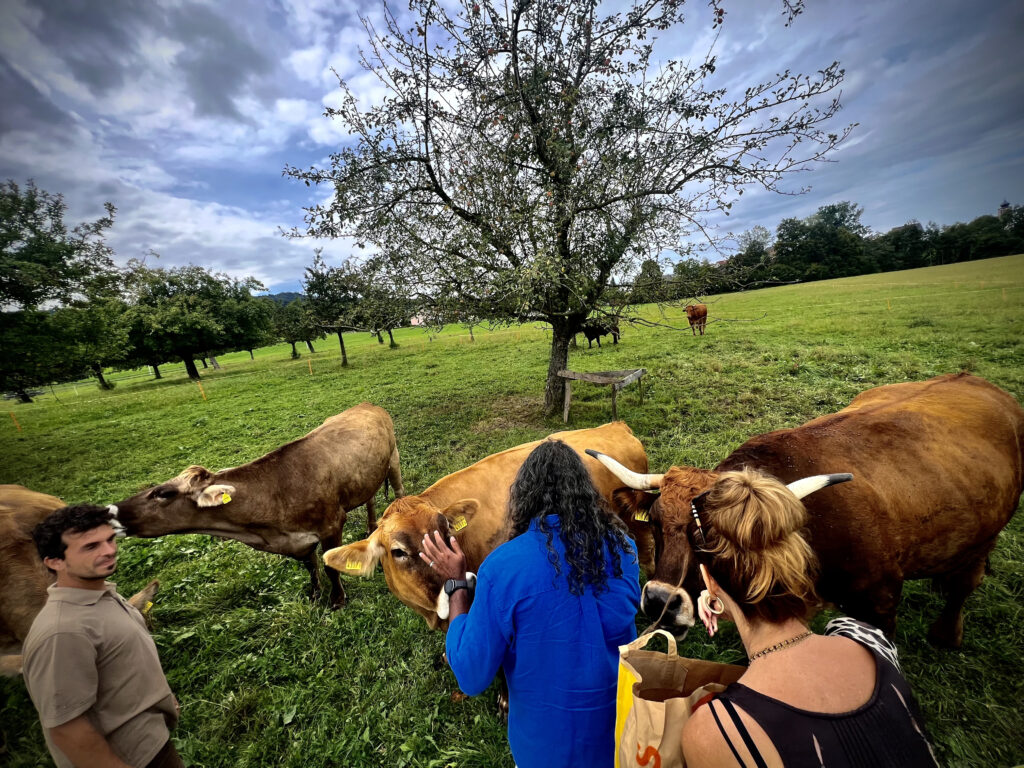
SKL: First, I had to go through my own emotional process. I wasn’t always connected with my feelings; I was stuck in the production cycle of the dairy industry, influenced by society. I was doing fine, but I wasn’t really experiencing a wide range of emotions. Through my experience with Master Eder, a cow that was in pain, I started to feel differently. When I stayed by his side as he struggled and eventually passed, I was able to sense his pain, fear, and ultimately trust. It was a turning point for me. The feelings and emotions became palpable, opening up memories and allowing me to feel joy, happiness, and compassion again.
TAT: How was it possible to make the change from a dairy farming to an animal life farm?
SKL: We got help from other Animal protection organizations. In Switzerland, there is the Hof Narr -animal life farm, which has been doing this for a long time, and they very well supported us. Also, it takes courage, and you need people who can show it, where you can see how it works, that it works, people who believe in it. That’s exactly how we shown the way to the animal life farm. We had an opening party, and lots of people came. Some people are very interested in animal welfare, who would like to have animals themselves but live in an apartment and can’t afford it, or animals are not allowed. So, they come to the farm, choose to sponsor an animal and realize it’s a great experience. It can be an ostrich, a cow, a kangaroo, a chicken, or a goose. They can actively accompany the animal, visit it, feed it, support it, and even help out here. They can come with their family to see the animals and just enjoy feeling good here with them.
There is such peace in being part of a philosophy for a new way of farming—enabling a new way of dealing with animals. They’re part of the fact that the animals are doing well, and that they, like us, are allowed to simply be—they don’t have to produce something or give their lives. It doesn’t have to be like this, and I’m supported by many sponsors, with more always coming in. That makes us very happy because it takes a lot of work. There are many costs: feed, structures, animal care, farm upkeep, machinery, maintenance, electricity bills, etc. It’s working so well now that we’re able to continue this.
TAT: Can you share an impactful story from the transition period?
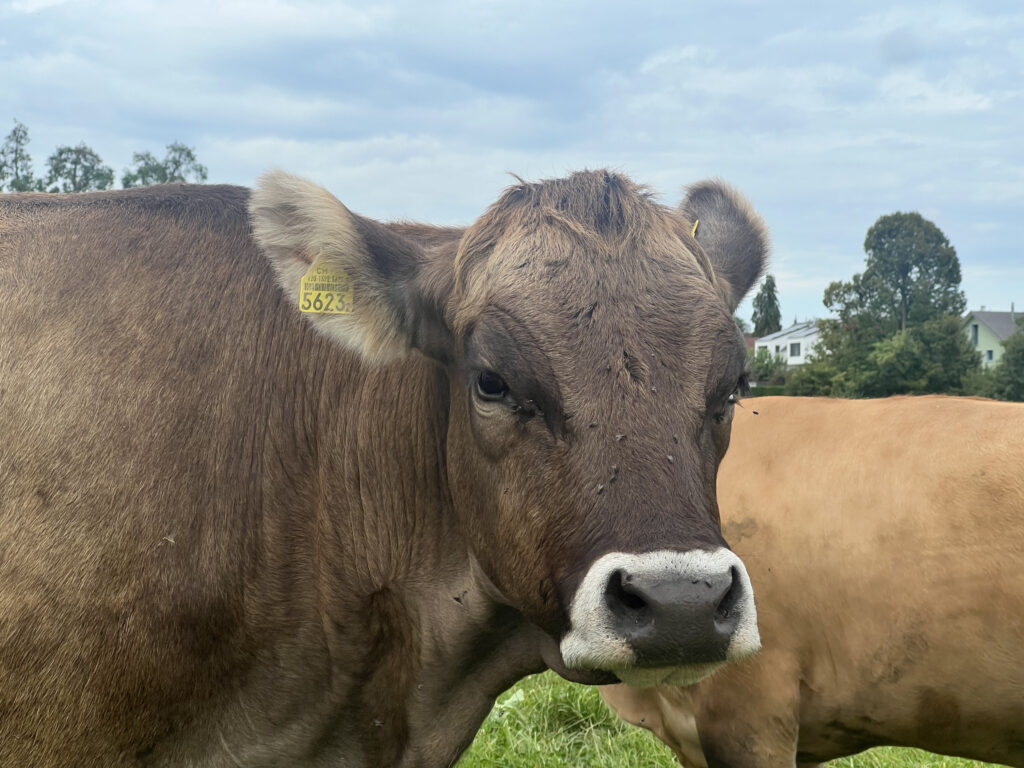
SKL: One story that stands out involves Master Eder, a black Angus ox. He broke his leg and was almost ready for slaughter. We still slaughtered animals back then, but this moment was pivotal for me. I stayed with him as he lay in pain, trying to stand but unable to. I stayed with him until the emergency butcher arrived. While I was with him, I placed my hand on his face, and he became calmer. There was a moment of trust and connection between us—it was very emotional. He seemed to trust that everything would be OK, and I was there to offer him comfort in his last moments. That experience made me realize how deeply animals feel and how much they rely on us for care and compassion.
TAT: What does a typical day look like for you now?
SKL: I still work part-time as a carpenter, three days a week, while managing the farm. However, our farm has evolved into a sanctuary. We now have many animals that live with us, including ostriches, cows, kangaroos, chickens, and geese. Around 60% of the animals are sponsored by people who care about animal welfare and want to support our philosophy. These sponsors visit the farm, feed the animals, and even help out. It’s a way for people, especially those who can’t have animals themselves, to connect with and support them.
The daily work includes feeding the animals, maintaining the farm, covering the cost of food, labor, and other structural expenses, and taking care of everything from feed costs to electricity bills. We’re also focused on agrotourism, our farm store, direct marketing, and arable farming, all of which help sustain the farm financially.
TAT: Do you rescue animals from slaughterhouses?
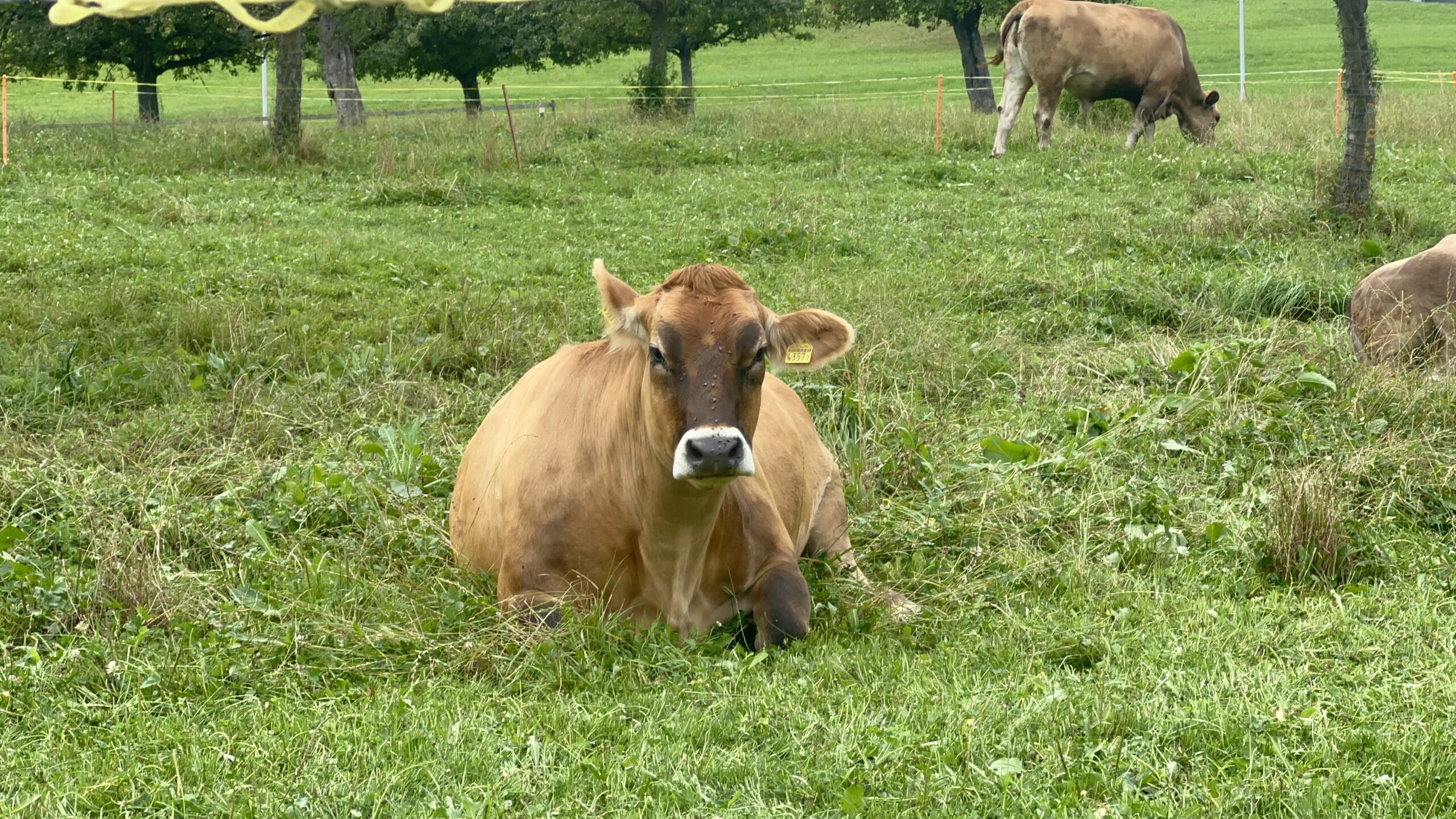
SKL: We don’t typically rescue animals from slaughterhouses, but we do take in animals from time to time. For example, we once took in a goose that had been found near a railroad track by a slaughterhouse before Christmas. We named her Mrs. Holle. She’s still with us, though she doesn’t have a sponsor yet, and we fully finance her care ourselves. We also brought in a second goose to keep her company. In addition, we have our own cows that we chose not to slaughter. We now have 17 oxen and cows, 7 kangaroos, 2 geese, 5 ducks, and 10 chickens, many of which are still in need of sponsors.
TAT: What’s your vision for the future of Känguruhof?
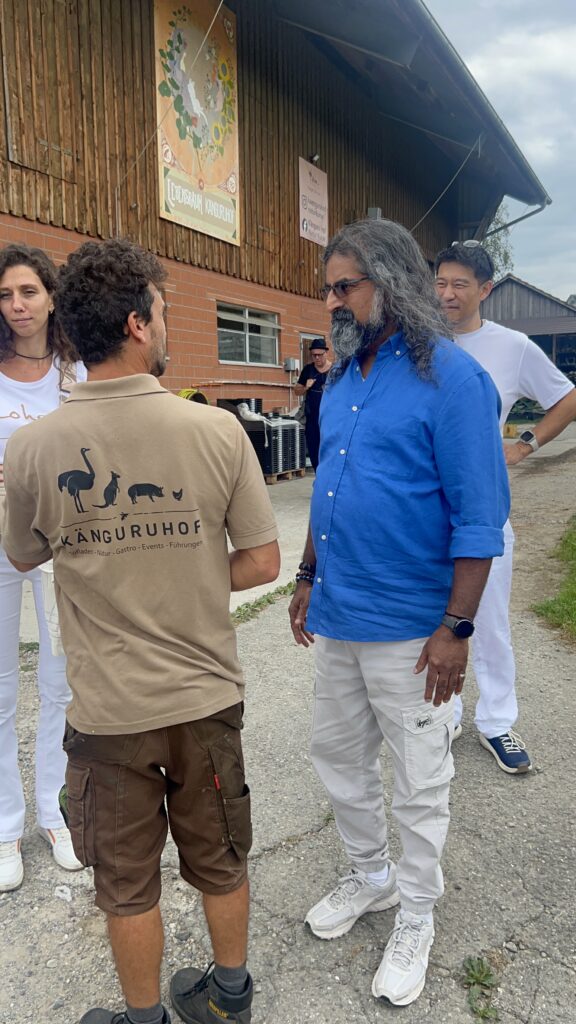
The future vision of my farm is “Känguruhof 2.0.” It’s all about bringing more people to the farm—whether for team-building events, volunteering, or just to reconnect with nature. Many people, especially those working in IT or cities, have become disconnected from where their food comes from and from nature itself. We want to allow them to experience meaningful encounters with animals, and learn about healthy nutrition.
We’re also focusing on community-supported agriculture, vegetable growing, permaculture, and arable farming. The goal is to inspire other farmers to rethink their approach, as I did, and to have more direct contact with consumers. By doing this, we can create a more sustainable and ethical agricultural system, free from dependence on large corporations and factory farming.
TAT: How can people support and get in touch with you?
SKL: It’s very easy to support us. You can find all the information you need on our website or reach us by email at info@kaenguruhof.ch. We also host events like birthdays, weddings, and brunches, and we offer all vegetarian, mostly vegan meals.
TAT: Do you have a final message for our audience?
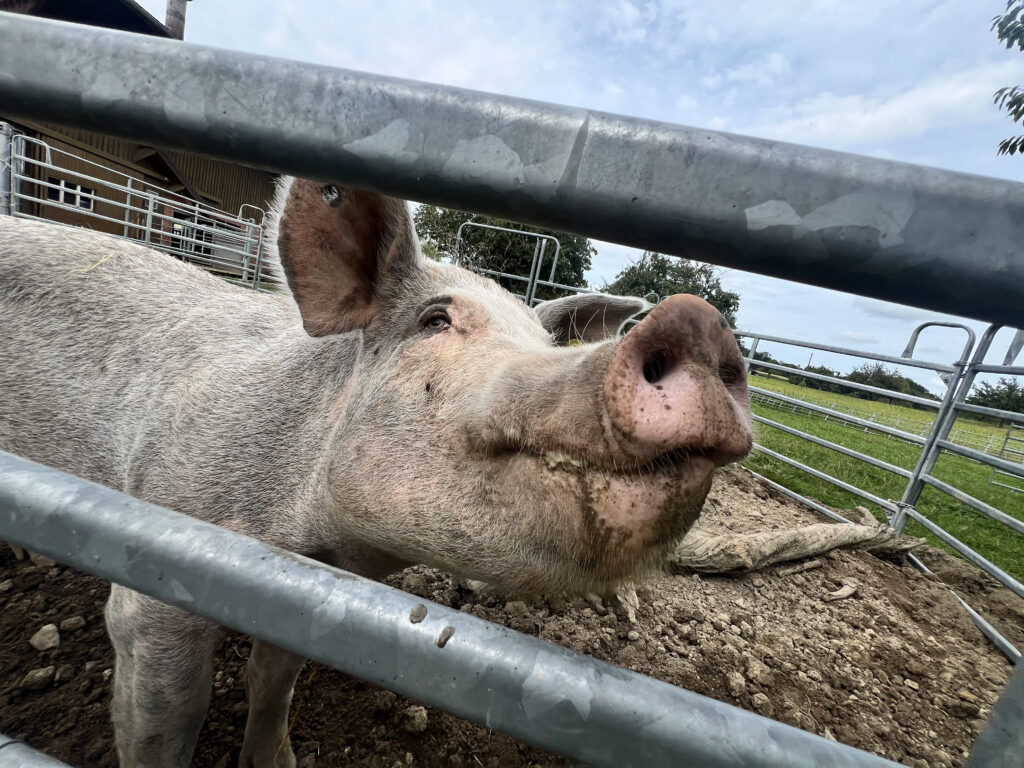
SKL: I want to remind people that the term ‘farm animal’ is a category created by society. It separates us from the animals and makes them seem less empathetic or less capable of forming bonds with humans. But that’s not true. Animals—whether they are cows, pigs, sheep, or horses—are sentient beings, just like us. They feel pain, fear, and joy. In today’s world, we don’t need to rely on meat consumption. We have access to plant-based foods, and there are so many alternatives available now. It’s time to rethink how we treat animals and make choices that align with compassion and empathy.