Navigating the Wisdom of Vasthu for Harmonious Living
Rooted in the profound depths of ancient Indian wisdom and architectural expertise, Vasthu, or Vastu Shastra, stands as a venerable testament to the meticulous exploration of spatial design and harmonious living. Today, we have the privilege of delving into the timeless realm of Vastu principles with Mr. Kanippayyur Krishnan Namboodiripad, whose lineage from Kerala, India, embodies a profound understanding of Vastuvidya, astrology, and spiritual traditions.
As an aacharya in Vaasthu, Krishnan Namboodiripad has always believed that he ought to give back something to society. Besides accepting the post of Dean and lecturing at the Vaasthu Vidya Gurukulam established by the Kerala Government in Aranmula in 1990, he travels across the globe propagating this unique ancient wisdom of India. Join us as we explore the enduring significance of Vasthu in shaping our lives and homes, and discover the profound wisdom embedded within its principles.
The Awakening Times (TAT): Dear Mr. Namboodiripad, thank you for this opportunity. Please tell us about Vasthu and its core principles.
Kanippayyur Krishnan Namboodiripad (KN): Vasthu is the dwelling place of mortals and immortals – mortals like human beings, animals, birds, plants, and all other living things and immortals like God, Demigods, Spirits, etc. Vasthuvidya is the science dealing with the construction of housing units and proper placement of household articles and subsidiary constructions like cattle sheds, wells, etc.
The important role of Vasthu complied House is to preserve the human body from excess climate conditions, like excess hot, excess cold, excess rain, etc.
So, the construction of Houses should be in tune with the nature.
The principle of Vasthu Shastra is to build without harming Nature
TAT: Do the dimensions of rooms and the overall house, impact peaceful living according to Vasthu?
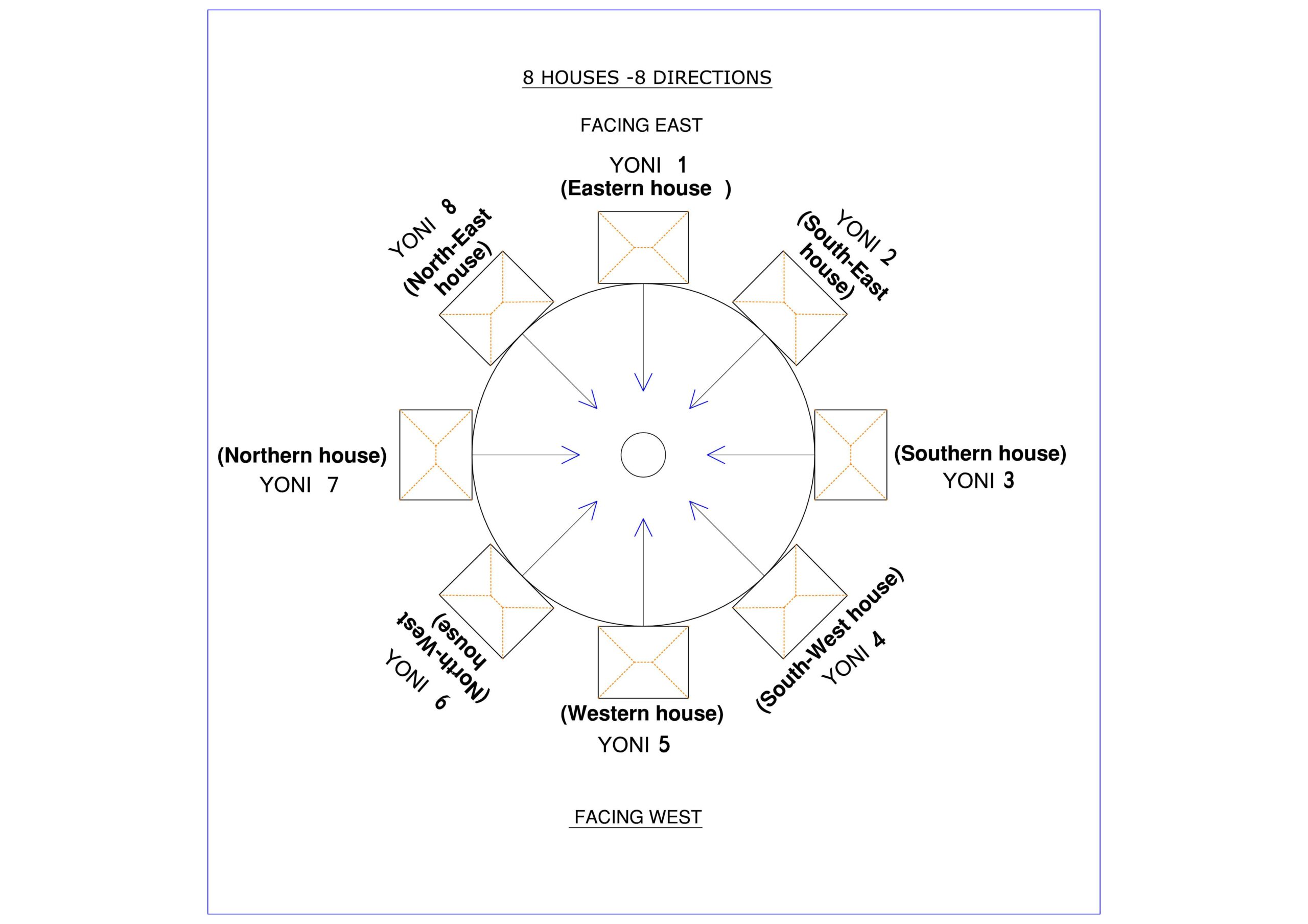
KN: In Indian Vasthu Vidya, it’s crucial to align constructions precisely with the cardinal directions. Lands with irregular shapes or unfavorable geographical features, like western slopes, are to be avoided. The text ‘Manushyalaya Chandrika’ provides guidelines for selecting suitable land, suggesting that it should slope towards the east or north to receive auspicious sunlight at sunrise. Additionally, the land should be fertile and have access to groundwater.
TAT: How can incorporating Vasthu Principles into home construction enhance the quality of life?
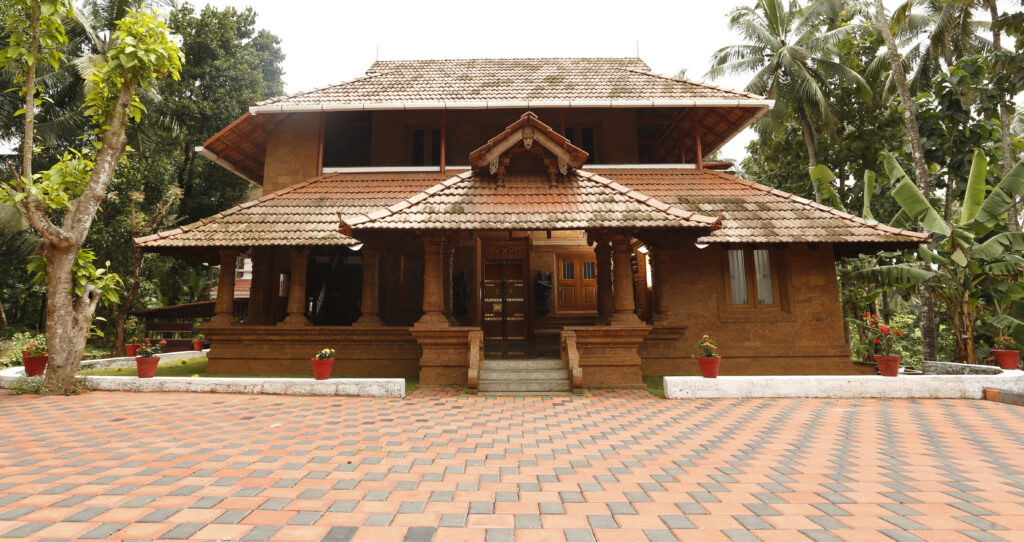
KN: When planning our homes, which are where we spend a significant portion of our lives, to enhance our quality of life, it’s crucial to consider the following aspects:
- Orientation of the House: Ensuring the house is aligned with auspicious directions.
- Positioning of the Kitchen and Cooking Direction: Placing the kitchen in a favorable position and ensuring the cooking direction adheres to Vasthu principles.
- Placement of Bedrooms and Bed Positioning: Arranging bedrooms in suitable locations and positioning beds in alignment with recommended directions, such as having the head towards the South or East.
These dimensions and placements are guided by ancient principles, as articulated in the Sanskrit sloka ‘Yoni prana eva dhamnam yedasmath Manushyalaya Chandrika.’ The measurements are often based on the Purusha-pranam (the height of a human being) and follow specific unit systems outlined in Vasthu principles. Calculating the perimeter of outer walls and inner rooms according to these principles is essential, as our usage of these spaces significantly influences the residents’ well-being.
TAT: Which direction is optimal for positioning one’s head while sleeping for a positive and healthy life according to Vasthu?
KN: It is recommended that when sleeping, one should position their head towards the South or East direction.
TAT: According to Vasthu Principles, what direction is considered the most auspicious for the entrance of a house?
KN: While houses with entrances facing any direction are acceptable, Indian Vasthu guidelines favor specific orientations. It is preferred for houses to have Eastern or Northern front yards. This preference stems from the belief that the sun rising in the east and certain important stars positioned in the north provide vital energy for living. Therefore, North-facing and East-facing houses are considered the most auspicious according to Vasthu principles.
As a second choice, the houses can be constructed facing true west and south directions , if road comes on that directions.
TAT: Who is eligible to learn and practice Vasthu?
KN: For those interested in learning Vastu Shastra, there’s an inclusive classification system. It includes:
- Sthapathy – Chief Architect
- Soothragrahy – Executive Engineer
- Thakshakan – Supervisor
- Vardhaky – Workers
Individuals falling into any of these categories are eligible to study and practice Vastu Shastra. Indian Vasthu Vidya organizes these roles in a hierarchical structure, reflecting their varying levels of expertise. Architects, positioned at the top, are required to have extensive knowledge not only in Vasthu Vidya but also in various Indian knowledge systems. At the bottom of this structure are carpenters.
TAT: Is Vasthu rooted in Vedic traditions ? How is it connected to astrology and the Vedas?
KN: There are four VEDAS, believed to came from 4 faces of Lord BRAHMA (The Creator)
RIGVEDA – From East side Face of BRAHMA
AYURVEDA is considered as upaveda of RIGVEDA
YAJUR VEDA – From South side Face of BRAHMA
DHANURVEDA – is Considered as UPAVEDA of YAJUR-VEDA
SAMAVEDA – from West side Face of BRAHMA
GANDHARVA-VEDA – is Considered as upaveda of SAMA-VEDA

ADHARVAVEDA – From North face of Lord BRAHMA
STHAPATHYA-VEDA is considered as UPAVEDA of ADHARVA-VEDA
RIGVEDA gives us the Knowledge of things
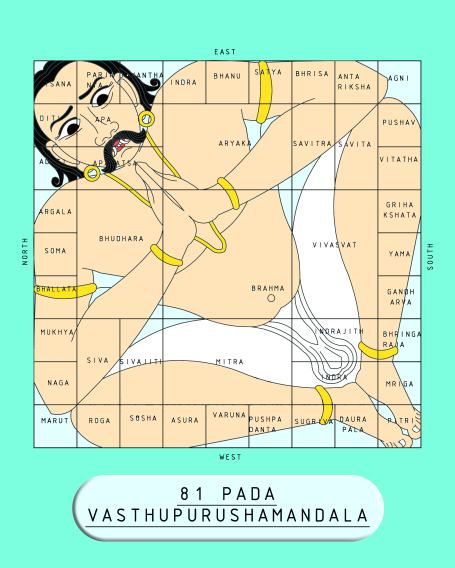
Indian Vasthu Vidya is believed to have originated as a subsidiary of the Atharva Veda. It extensively incorporates graphic representations and geometrical shapes from the Sulba Sutra. Later, astrology principles were integrated into the dimensions of construction.
Vasthu is defined as ‘Amartyaschaiva martyasschaiva yatra yatra vasanthi tadvasthu,’ emphasizing the significance of direction. According to MANASARA, the Earth, which sustains all life, originates from the sun. In many ancient cultures, including India, the sun is revered as the source of energy.
In VasthuVidya, it’s prescribed that all structures be oriented according to the cardinal directions. The corners symbolize different aspects—South East for fear, South West for quarrel, North West for inconsistency, and North East for infertility.
Earth rotates from West to East daily and North to South yearly. Similar to feeling uncomfortable when traveling against the direction of a moving vehicle, aligning houses with the Earth’s rotational directions—North-South and East-West- promotes harmony and well-being.
Vasthu encompasses both mortals and immortals—the former including humans, animals, and plants, and the latter comprising deities and spirits. Vasthuvidya deals with constructing homes and placing household items and other structures in harmony with nature.
A well-planned and positioned house provides peace and comfort. Living in harmony with nature, akin to riding with the wind, reduces energy consumption and promotes prosperity. Vasthuvidya, rooted in natural principles, facilitates physical, mental, and financial well-being.
Vasthu is likened to the Earth, which relies on water, balanced by fire, controlled by air, and moves through space. Similarly, the human body is compared to this elemental cycle-earth, water, fire, air, and space-underscoring the interconnection between Vasthu and life, as reflected in the concept of Vasthu Purusha Mandala.
The Kulapathy of Sthapathya Veda
Brahmasree
KANIPPAYYUR Krishnan Nambuthiripad
Dean
VASTHU VIDYA Gurukulam
Govt of Kerala
India
Dean
Sthapathya veda
Maharishi Mahesh yogi Vedic university
Vlodrop
Netherlands
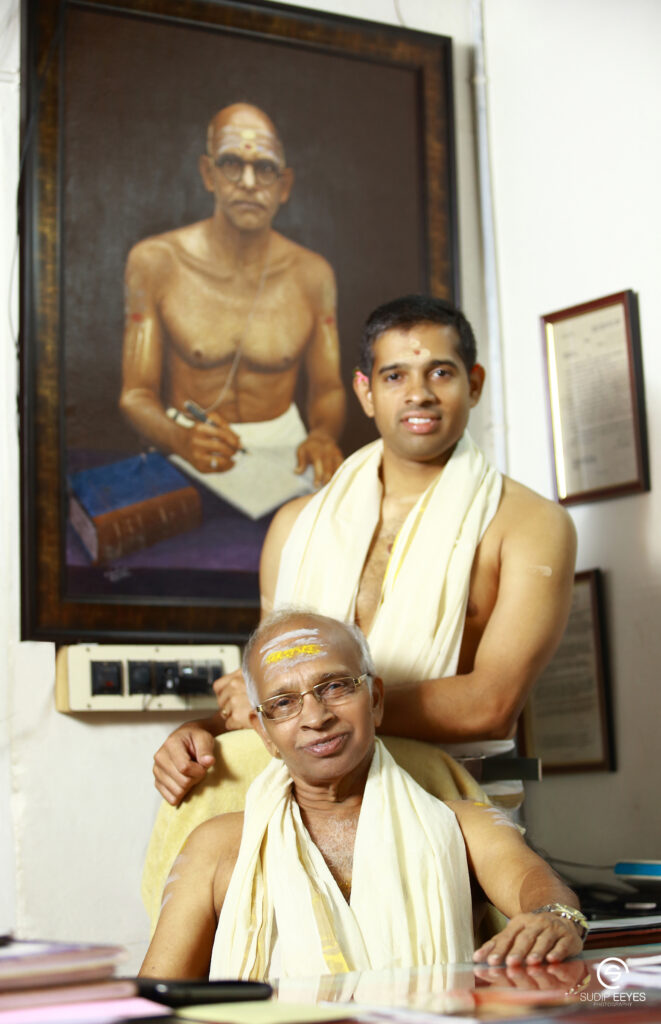
With son
Krishnan Nambuthiripad
Junior