-Interview with Srđan Bogičević
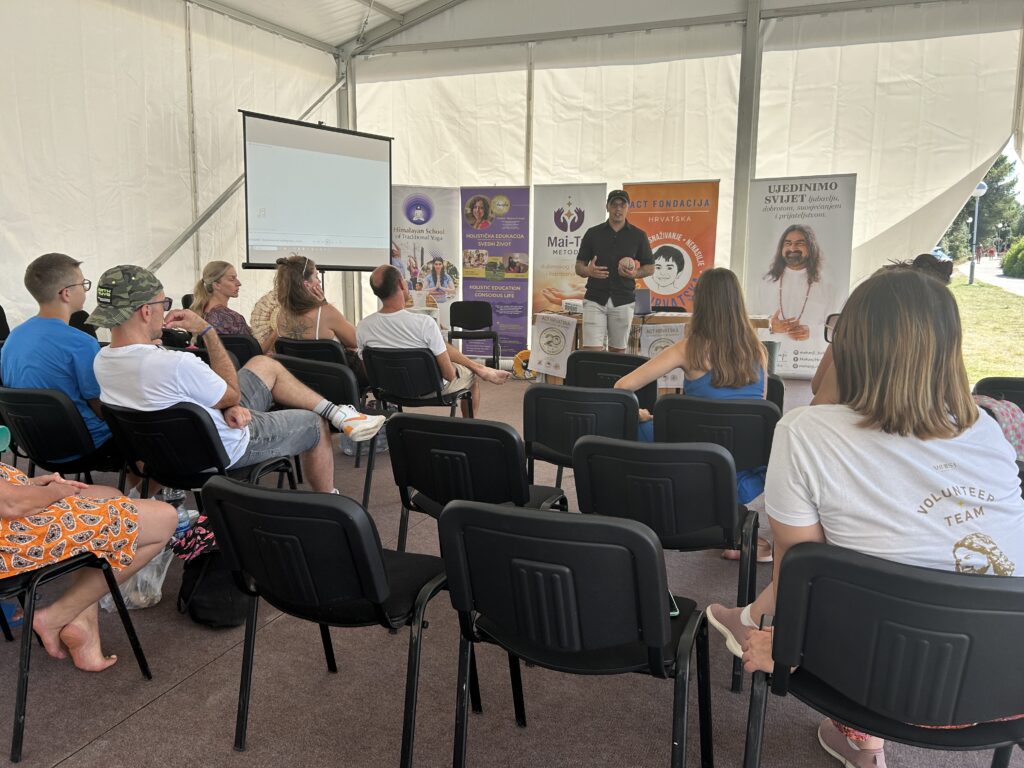
Have you ever wondered why sometimes your intentions, visualizations, and goals seem to align perfectly, only to later lose their magic? Srđan Bogičević, a neurobiology enthusiast and mindfulness expert, dives deep into the mechanics of the brain and consciousness, offering practical routines and insights on how to reprogram your mind for lasting success. In this captivating workshop, Srđan teaches you how to harness the power of neurobiology and daily practices to make your brain work for you—every single day.
The Awakening Times (TAT): Who is Srđan?
Srđan Bogičević (S.B): The definition of who I am changes every day. I’m just a regular guy who loves neurobiology and helping people.
TAT: Is neurology your profession?
S.B: I avoid talking about that because it doesn’t make sense to me. What does “profession” even mean, and why is it important whether someone has a degree? I’ve been working in neurology for about 7-8 years, but I got into it through self-analysis, observing what was happening in my life and why certain things stopped working. I was curious why sometimes I could dream, visualize, and set intentions, and it would work, and then suddenly, it would stop being effective. I wanted to understand the biological reasons behind that, so I studied it deeply. Now, I share this knowledge with others, explaining both the scientific and spiritual sides, so people from both perspectives can understand.
TAT: Tell us about the workshop you’re holding today.
S.B: Come to the workshop (laughs). Well, it’s about awareness. Most people go through their day using only 10-20% of their potential. Scientifically speaking, it’s not possible to be aware 100% of the time because the brain needs to conserve energy. It tends to shut off, and what matters is what thoughts and behaviors you demonstrate during those “off” moments. When you’re aware, you know what you need to do. But when you act unconsciously, problems arise.
I teach people the importance of setting routines and habits to demonstrate the right thoughts and behaviors when they’re not consciously thinking. It’s a simple practice: everyone needs to create their own daily routine, whether it’s prayer, meditation, setting intentions, walking in nature, yoga, or tennis. These routines, done in the morning, afternoon, and evening, are designed to activate certain brain regions so that the brain works for you.
Of course, it doesn’t always work perfectly, depending on your state of being. For example, the other day, I woke up early by force, even though I normally wake up around 4-4:15 and like to be in the gym by 4:30. But my baby wasn’t sleeping, there were work challenges, and my energy was depleted. In those moments, it’s not about fighting it. Sometimes, the best thing you can do is just sleep, as rest is often the best medicine.
The biggest challenge with my workshops is when I tell people that if they adopt these routines, they might not see results for six months or even six years. It’s not a quick fix, but it’s the truth.
TAT: Can practicing silence reduce the number of thoughts and help us access a deeper state of being?
S.B: Honestly, it annoys me when spiritualists talk like that. It’s impossible to reduce the number of thoughts; it’s just not possible. The only thing you can do is enter the state of the observer. We receive so much information during the day that it’s nearly impossible to process everything and maintain complete mental silence. Most of the time, we’re not even aware of where these thoughts and information come from.
What we can do is learn to observe our thoughts, ensuring they have no effect on us. That’s not only possible but necessary. When you learn to become the observer, you can control the impact of those thoughts and avoid falling into a negative spiral.
I’ve been practicing Kundalini pranayama, an advanced breathing technique, for years, but it’s not for everyone. If done incorrectly, it can lead to serious consequences, which is scientifically proven. Over time, I’ve had various experiences, including some out-of-body ones, but I’ll keep those details to myself. Most of these experiences happened when I was in the jungles of Costa Rica. The environment greatly influences the depth of your experiences.
I once joked on social media about the contrast: “From monk to Serbian in two days.” I’m a typical Balkan guy, so coming from the peace of the jungle to the noise of Belgrade was a shock. It’s easier to work on yourself in supportive environments, but the real challenge is doing it in noisy, unsupportive places. That’s where true mastery comes in.
TAT: How can we isolate ourselves from the noise in these challenging conditions?
S.B: Through regular daily practice. It also helps to spend as much time in nature as possible for grounding. Create a space in your home where you can practice these routines. My daily set of routines includes meditation, evening prayer, and working out six times a week. There’s no magic formula—just practice.
TAT: How did you become interested in neurobiology?
S.B: As I mentioned, for years, I meditated, visualized, set intentions, and created a great life. But one day, it all stopped working. When that happened, I wanted to understand why and how to fix it. We tend to complicate things, seeking countless techniques and practices, which only leads to confusion. In reality, we should just do what works for us—if you like writing, write; if you like meditating, meditate; if you pray, keep praying. Just make sure to do it every day.
I can provide routines that make sense biologically, but everyone has to find what works for them. For example, I understand that meditation is most effective in the early morning due to brain biochemistry, but if you feel better doing it at night, then meditate at night. Consistency is what matters.
I’ve established a set of routines that work for me. For instance, I tried going to the gym at 7 a.m., but it didn’t work. I tried noon, but after my son was born, I realized that wasn’t possible either. Now, if I don’t work out by 6 a.m., it won’t happen. It’s what works for me. You need to find what fits your life.
We can also discuss topics like starting a business or launching a company, but everything comes down to how prepared you are. If you start meditating today, you might see results in six months. If you start setting intentions today, the results will also take time. There’s a saying: “A year from now, you’ll wish you had started today.” That’s not just a cliché—it’s true.
Just the other day, I told my wife, “I’m working out now so that in 15 years, I can play basketball, hike, or swim with our son.” I want to stay fit so I can do all those things with him when he’s older. But even if he doesn’t want to, I’ll still be in shape, doing it all on my own. Staying in shape is a motivation for me.
TAT: What about discipline? What happens when we falter?
S.B: Take a deep breath and say, “Today is a new day.” And start over. There’s no quitting.
A few months ago, I felt like giving up. I was building a business, working hard, and couldn’t handle it anymore. I told my wife, “I’m going to quit everything.” She replied, “You don’t need to quit, you just need a good rest.” That was the best advice I ever received—because quitting is not an option. What are you quitting? Yourself?
It’s okay to feel overwhelmed, but it’s not okay to stay in that state. I call it a “state of sh*t” or “state of bliss.” Which state do you want to be in? If you want bliss, go outside, connect with the sun, and do your practices.
TAT: And emotions? Impressions?
S.B: Emotions don’t exist. They are just constructed concepts, meanings we assign to physiological sensations. Emotions aren’t triggered or universal—they’re a product of human agreements. They’re meanings we give to sensations in the body.
When something happens that triggers a sensation inside you, that’s not an emotion. That’s a sensation. It becomes an emotion only when you name it, when you assign it a concept like “fear” or “joy.”
I always recommend mindfulness meditation, focused either on breathing or a mantra. It’s the best practice biologically, hormonally, neurochemically, and spiritually.
TAT: Tell us about your books.
S.B: One is The Art of Imagination, written in English, and the other is Reprogramming the Mind. I have five books written in total, and next year I plan to publish a serious scientific book.
TAT: Any message for the end?
S.B: Be a better human, nothing more.
TAT: How?
S.B: Help your neighbor. Everyone wants to change the world; start with your street.