Author: Pradeep Krishnan
Reconnecting Through Ashram Life
I prefer to visit and stay in an ashram because it offers a sanctuary from the distractions of modern life—allowing me to reconnect with my inner self. Since my initiation into spirituality, I have been drawn to the tranquil atmosphere of temples and ashrams, seeking clarity and inner harmony. That is why my wife, Sreelakshmi, and I choose to immerse ourselves in ashram life: the disciplined routines of worship, meditation, bhajans and communal living nurture mindfulness, emotional well-being, and personal growth. The simplicity and serenity of the environment, paired with the support of a like-minded community, enrich our shared journey toward inner peace and self-discovery.
A Decade-Long Aspiration
About a decade ago, during a visit to the serene Shanti Ashram in Kotagiri, Tamil Nadu, I had the rare opportunity to meet Jnaneswari Mataji, the revered President of the Shanti Ashram, who was spending the summer months there. In the quiet simplicity of that gathering, Mataji extended a warm invitation to me to visit the Ashram’s headquarters nestled in the remote Thotapalli Hills of East Godavari District, Andhra Pradesh. That moment—her smile, the gentle authority in her voice, and the subtle grace of the invitation—remained etched in my hearts. Ever since, Sri Santi Ashram at Thotapalli became a cherished name on our spiritual bucket list—an inner longing waiting to be fulfilled. That long-awaited journey finally unfolded in August 2024. After a deeply moving visit to Sri Velpur Mouna Swami, we set off for Sankhavaram, near the Thotapalli Hills, where the ashram is located—about 120 kilometres away.
The Sacred Journey
The journey itself was sacred. We passed through Rajahmundry (now officially Rajamahendravaram) and Annavaram, two ancient temple towns steeped in the spiritual heritage of Andhra Pradesh. As our car approached the iconic bridge over the mighty Godavari River, we stepped out reverently. With cupped hands, we sprinkled the holy water upon ourselves, chanting:
“gaṅge ca yamune caiva godāvari sarasvati narmade sindhu kāveri jale’smin saṃnidhiṃ kuru”
[“O sacred rivers Ganga, Yamuna, Godavari, Saraswati, Narmada, Sindhu, and Kaveri—may your divine presence be in this water.”]
Crossing the Godavari was no ordinary experience—it was breathtaking. As we drove over the long bridge, nature revealed her grandeur. On either side, the vast expanse of shimmering waters mirrored the golden hues of the sun, turning the river into a celestial canvas. Gentle ripples danced on the surface; distant boats glided like silent prayers, invoking a timeless stillness. The breeze carried the scents of the riverbanks and whispers of ancient lore. In that moment, the Godavari wasn’t just a river—it was a living, breathing deity, commanding awe, reverence, and deep inner silence.
Though our itinerary did not include temple visits, our kind-hearted driver made an unscheduled stop at a few temples in Rajahmundry and the sacred Satyanarayana temple at Annavaram—yet another act of divine grace guiding our path (hopes to describe in a separate article).
We left behind the bustle of Annavaram as the road gently led us through quaint villages nestled amidst green fields. Soon, the landscape transformed into a serene stretch of forest, where nature unfolded in all her splendour. Towering tamarind and neem trees lined the roadside, their canopies offering cool shade from the afternoon sun. Peacocks gracefully crossed our path, and vibrant butterflies danced from flower to flower. The air was rich with the scent of wild blooms and the earthy fragrance of the woods. Occasional glimpses of monkeys swinging through the trees and birds chirping in melodious chorus made the drive feel like a sacred passage into a world of peace and simplicity.
Sri Santi Ashram: The Mission of Peace
Founded in 1917 by the great spiritual visionary Swami Omkar (21.01.1895 – 10.06.1982), Sri Santi Ashram stands as a beacon of spiritual light in the tranquil village of Thotapalli. Encircled by two gentle hill ranges and nourished by a perennial spring named ‘Mallikarjuna Dhara’, the ashram exudes a rare blend of natural beauty and spiritual energy.
Swami Omkar, a seer ahead of his time, established the ashram as a ‘Mission of Peace’, with branches at Visakhapatnam, Kakinada, and Kotagiri. Mataji Jnaneswari, whom Swamiji intuitively recognized as his sister from a previous birth, was entrusted with the leadership of the ashram. Having joined as a child, she has grown to embody its spiritual legacy—a living example of selfless service and radiant inner wisdom.
Arrival at the Ashram
As we approached the Ashram, the world outside slowly dissolved into silence. The bustling towns gave way to rustic village roads, bordered by lush green fields, groves of coconut palms, and gentle hills shrouded in mist. It was as if nature herself prepared us for a deeper inner descent.
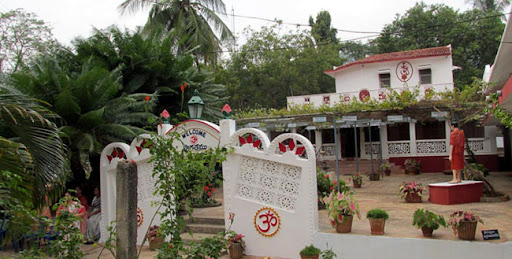
Upon entering the premises of Sri Santi Ashram, time seemed to pause. The air was thick with stillness—not the silence of emptiness, but the presence of peace. The Ashram’s humble buildings, built with simplicity and purpose, radiated quiet dignity, reflecting the spirit of renunciation and introspection.
We were warmly welcomed by dedicated ashram sevaks, who led us to our accommodation—simple, spartan rooms that offered all that was needed and nothing more. That very evening, we joined our first satsang, stepping gently into the Ashram’s rhythm.
Meeting Mataji Jnaneswari
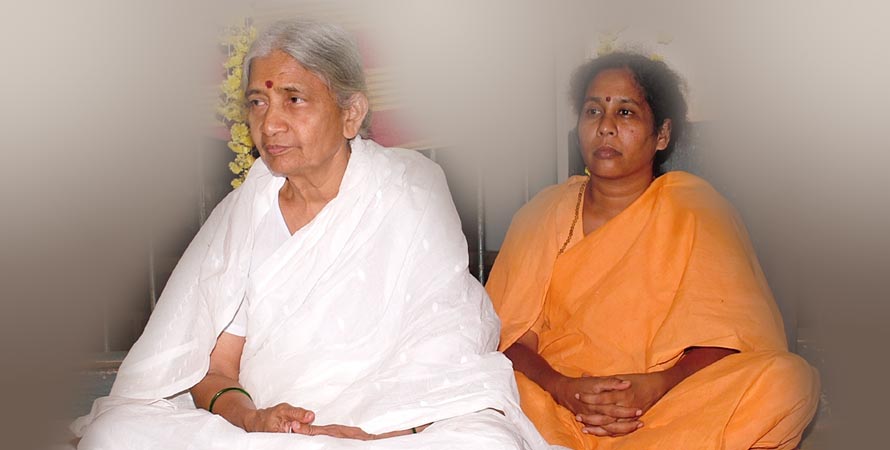
Mataji Jnaneswari is a radiant embodiment of silent wisdom and boundless compassion. A direct disciple of Swami Omkar, she carries forward his legacy with grace, depth, and unwavering dedication. Clad in pristine white, her presence exudes a rare tranquillity that immediately calms the restless mind. Though her words are few, every gesture, every silence, speaks volumes. To be in her presence is to experience a deep stillness — a reminder of the divine essence within and around us. Guided not by outward display but by the inner light of realization, Mataji Jnaneswari continues to inspire seekers from all walks of life, gently leading them toward a life of simplicity, surrender, and spiritual remembrance.
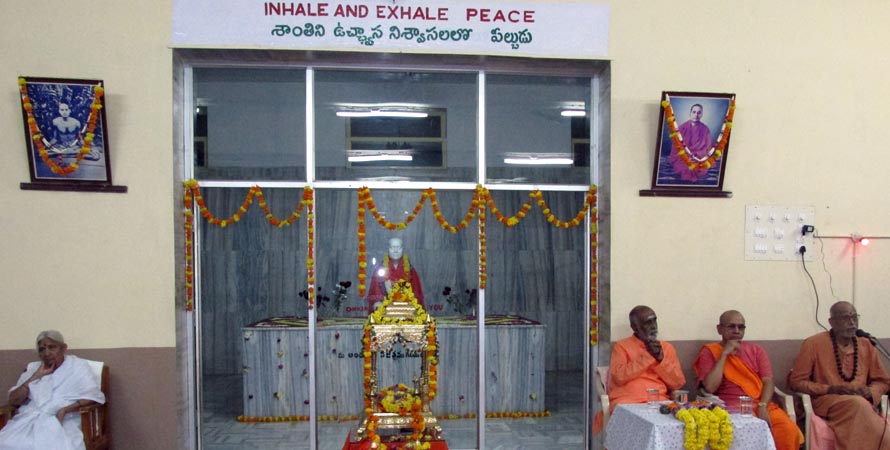
Undoubtedly, the most awaited and soul-stirring moment of our visit was our meeting with Mataji Jnaneswari. Clad in unblemished white, her serene face glowed with compassion and clarity. Her eyes reflected the stillness of someone deeply anchored in the eternal. Mataji accepted with her characteristic gentle smile, the humbly offered banana chips. As we sat before her, all formalities dissolved. She looked at us not as visitors, but as fellow travellers on the path. Her words were few, her pauses many. And in those silences, we found the unspoken teachings of presence, surrender, and remembrance.
She spoke softly about the essence of dharma, the need to turn within, and how peace is not something we acquire — it is what we are. “Peace,” she said, “is our true nature. It only needs to be remembered.” Her words, simple yet profound, reverberated within us like sacred mantras.
Life at the Ashram
The Ashram’s daily routine mirrored the rhythm of nature—calm, purposeful, and transformative. We rose at dawn to the call of the conch and birdsong, followed by meditation, chanting, and service (seva). Meals were satvik, lovingly prepared and humbly served. Each act was infused with mindfulness, each moment an invitation to dwell in the now.
We spent long hours walking in the Ashram’s gardens, watching sunlight dance through the trees, listening to the rustle of leaves, and letting our restless minds grow quiet. The absence of distractions gave rise to presence. In the company of fellow seekers, we found a sense of shared purpose and inner kinship.
The Ashram, spread over approximately 100 acres of serene land, is a haven of peace and natural beauty. Walking from the cottage where we stayed to the main Ashram building through the forested path was an exhilarating experience, especially during the rains. As we walked, we were enchanted by the vivid colors of blooming flowers, the towering green trees, and the lush shrubs that lined our path. Crossing an overflowing canal running through the Ashram added to the charm, its gentle gurgle blending with the sounds of nature. We wandered through the forest in awe and admiration; our hearts filled with joy and a quiet reverence for the pristine beauty surrounding us.
The Goshala at Shanti Ashram is a serene haven where cows are lovingly nurtured with utmost care and reverence. The gentle lowing of the cows, the well-maintained sheds, and the devotion of the caretakers reflect the ashram’s deep respect for all life. The milk from the Goshala not only nourishes the residents but also adds a special sanctity to the prasad and meals served at the ashram.
The ashram kitchen, known for its simplicity and purity, serves delicious and wholesome vegetarian meals three times a day. Cooked with devotion and offered with love, the food here nourishes not just the body but also the soul. Whether it’s the freshly made chapatis, the aromatic rice and dal, or the seasonal vegetables, every meal feels like a divine offering — a taste of sattvic living in its truest form.
One of the most heartening aspects of Shanti Ashram is its school and hostel, where children from underprivileged backgrounds are given free education, accommodation, and care. Rooted in the spirit of service and compassion, the school nurtures not just academic learning but also moral and spiritual values. The smiling faces of the children, their disciplined routine, and the loving environment reflect the Ashram’s deep commitment to shaping a generation grounded in dharma and inner strength.
Throughout our stay at the Ashram, we were deeply blessed by the warm companionship and quiet guidance of Sri Narayan Reddy from Hyderabad, who was there on a spiritual retreat. A devout seeker with a gentle presence, Sri Reddy graciously accompanied us as we explored the sacred spaces of the ashram, patiently showing us around and ensuring that we felt completely at home. Being a native Telugu speaker, he became an invaluable bridge, helping us communicate freely and meaningfully with the ashram officials and the bright-eyed children of the ashram school. His selfless service, offered without the slightest expectation, left a lasting impression on our hearts. We remember his kindness and humility with deep gratitude, for his presence added a quiet grace to our spiritual experience at Shanti Ashram.
A Quiet Departure, A Lasting Impact
All too soon, our brief retreat came to a close. After two days steeped in silence and grace, it was time to return. We took leave of Mataji, the ashram sevaks, and the sacred soil of Thotapalli with folded hands and full hearts. While the journey back was filled with the familiar sounds and movements of the world, something had shifted within us.
There was more silence between words, more stillness between breaths, and a newfound depth to our everyday awareness. The world outside remained unchanged, but our gaze had softened.
Sri Shanti Ashram reminded us that true pilgrimages are not always about distant destinations, but about inner awakenings. In its quietude and simplicity, the ashram offered us not just a temporary refuge but a profound reconnection — with ourselves, with nature, and with the eternal presence that dwells within all.
For Sreelakshmi and me, those two days felt not just like a visit, but like a gentle return to a space where our hearts found deep peace and belonging.
Guidelines for Visitors to the Ashram
The Ashram welcomes sincere and earnest seekers. It is a sacred space dedicated to inner peace and the sincere pursuit of Truth. It is not intended for tourism or casual visits. Accommodation at the Ashram is limited and as the Ashram is situated in a remote village where alternative lodging options are unavailable, visitors intending to stay must inform the Ashram at least one month in advance and obtain prior permission for stay. Usually, visitors are allowed to stay only for 2 to 3 days. However, those traveling from abroad or distant locations may, at the discretion of the Ashram, be granted permission to stay up to 7–10 days with permission. Simple South Indian vegetarian food and modest accommodation are provided free of charge. The Ashram offers simple South Indian vegetarian meals in the dining hall. Voluntary donations are appreciated to support longer stays and to help sustain the Ashram’s charitable activities, which rely entirely on the generous contributions of devotees. Individuals, families and small groups can visit and stay at the ashram. During peak times (especially December–January), shared accommodations will only be available.
Address and contact details:
The Mission Of Peace – Sri Santi Ashram (Mother Ashram)
Thotapalli Hills (via) Sankhavaram
East Godavari District – 533446
Andhra Pradesh, India
Telephone :
From Abroad : (0091) 7382009962
From India : 07382009962
Email : srisanthiashram@gmail.com
About the author:
Pradeep Krishnan, a Commerce and Law graduate with a post-graduate diploma in journalism, served in an Indian Government Department for 36 years. A passionate writer, for the past three decades, he has been contributing articles to several periodicals and online portals of repute, published in English, Hindi, and Malayalam.