Author: Azur Ekić
A figure that transcends time and culture
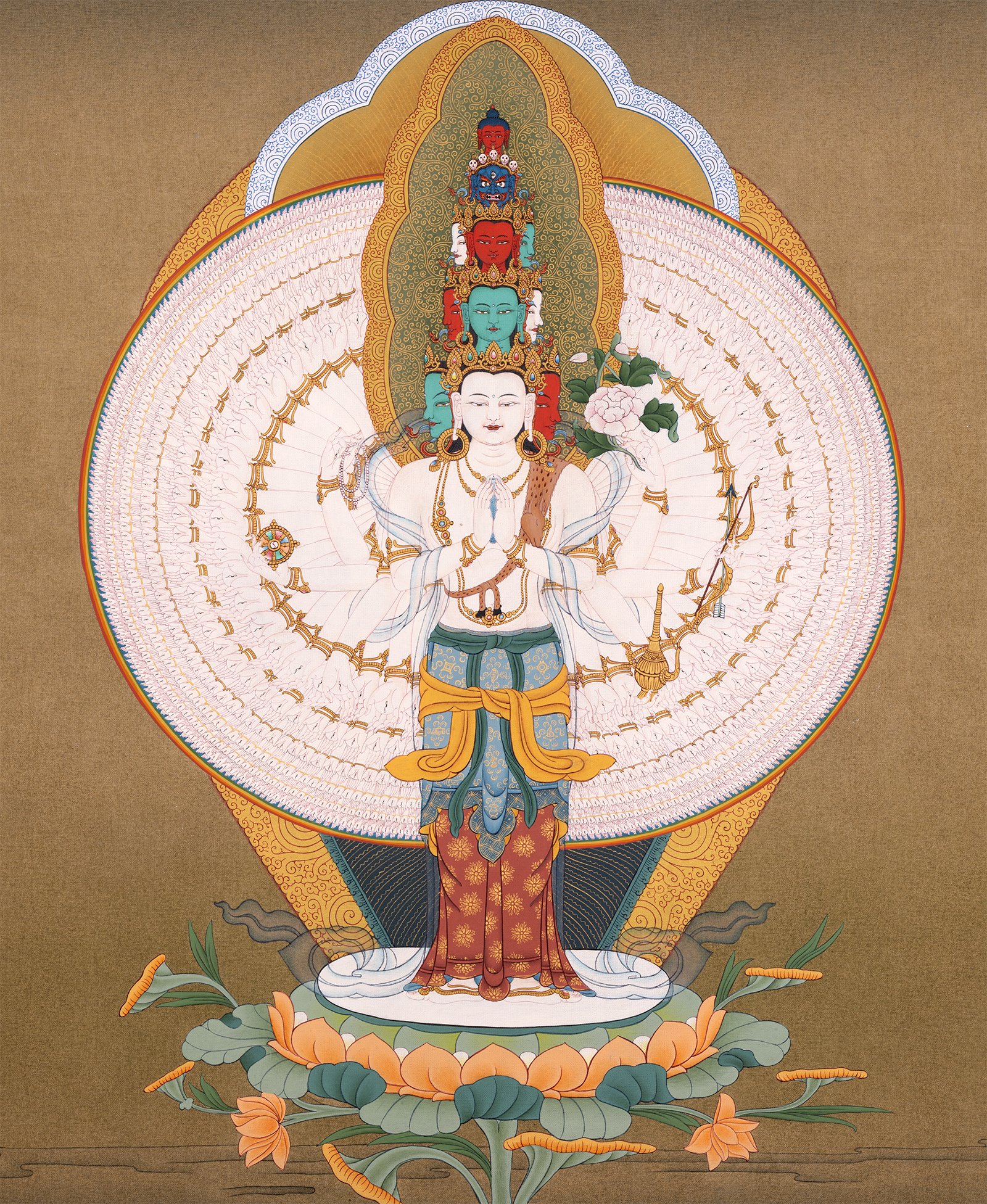
Across Asia, a single figure appears again and again in temples, paintings, chants, and personal stories: Avalokiteśvara. Sometimes portrayed with a thousand arms, sometimes with an elegant feminine face, sometimes as a quiet monk holding a lotus, Avalokiteśvara represents something universally sought yet rarely embodied in human life – boundless compassion. The name itself means “the one who looks upon the cries of the world.” That simple phrase captures the essence of Avalokiteśvara: a being who hears human suffering and responds with care.
What is a bodhisattva?
Avalokiteśvara is what Buddhists call a bodhisattva. In simple terms, a bodhisattva is someone who has reached the threshold of enlightenment – freedom from suffering – but chooses not to enter final Buddhahood until all other beings are liberated as well. It is a vow of radical selflessness. Instead of walking alone into peace, the bodhisattva stays behind, guiding others. This makes Avalokiteśvara not only a spiritual figure but also an ideal. In Buddhism, compassion is not a side practice. It is the very heart of awakening. Avalokiteśvara personifies that ideal in its purest form.
A journey through cultures
The story of Avalokiteśvara is also a story of cultural transformation. In India, Avalokiteśvara appeared in early Buddhist texts as a male figure, often depicted as a gentle prince or a monk. In Tibet, he became Chenrezig, and the Dalai Lamas are believed to be his living incarnations. In China, Avalokiteśvara gradually transformed into Guanyin, a feminine figure who became the most beloved deity in Chinese Buddhism, often imagined as a merciful mother listening to the prayers of children. In Japan, the same figure appears as Kannon, inspiring art, poetry, and pilgrimage traditions that continue to this day. The shifts in appearance reflect something important: compassion takes the form that people most need at a given time. Avalokiteśvara adapts, whether as a prince, a monk, or a mother, to remain close to those who call out for help.
Not just legend – lived devotion
It is easy to dismiss religious figures as symbolic, but Avalokiteśvara is not experienced that way by devotees. Stories of help and intervention abound, sometimes quiet, sometimes dramatic.
Devotees across cultures have left records of Avalokiteśvara’s intervention. In his book Bodhisattva of Compassion: The Mystical Tradition of Kuan Yin, the scholar John Blofeld recounts testimonies of Chinese Buddhists who believed Guanyin saved them from shipwreck, illness, or violent attack. One woman he interviewed described a vision of Guanyin during a serious fever, after which her condition improved unexpectedly.
The expert on Chinese culture Yü Chün-fang, in her study Kuan-yin: The Chinese Transformation of Avalokiteshvara, documents centuries of miracle tales in China, many involving protection in childbirth, rescue from fire, and deliverance from dangerous travel. These stories were central to Guanyin’s popularity, circulating in temples and popular prints.
More recently, Western practitioners also report subtler effects. In Faces of Compassion, Taigen Dan Leighton notes that repeated chanting of Avalokiteśvara’s mantra often helps practitioners manage anger, grief, and fear. While not framed as supernatural miracles, these experiences highlight how the bodhisattva continues to function as a companion in everyday struggles.
The practice of compassion
The most direct way people connect with Avalokiteśvara is through mantra. The Tibetan syllables Om Mani Padme Hum are among the most chanted words in the world. Monks carve them into stones, villagers spin them in prayer wheels, and ordinary people whisper them in times of fear or grief. Bokar Rinpoche’s modern guide Chenrezig, Lord of Love explains that the mantra is not magic in itself. It is a way of aligning with the quality Avalokiteśvara embodies. Each repetition is a small act of reshaping the mind toward kindness.
Other practices are simpler still. Lighting incense before an image of Avalokiteśvara. Offering a flower. Pausing to imagine what it would mean to respond to others with patience instead of irritation. As one Tibetan teacher once said, “The greatest offering to Avalokiteśvara is to become Avalokiteśvara.”
Why Avalokiteśvara still matters
In an age marked by distraction and division, Avalokiteśvara endures because compassion never goes out of relevance. While many may not chant mantras or light incense, the figure serves as a reminder of a possibility: to live with more patience, to see the suffering of others, to respond with care rather than indifference. Avalokiteśvara is more than a myth or a symbol. For millions, Avalokiteśvara is a companion, a source of strength, and an inspiration to act with kindness when it is hardest. That is why, after centuries, the bodhisattva still stands at the heart of Buddhism, whispering through mantras, appearing in dreams, painted in temples and museums alike. The message remains simple and urgent: listen to the cries of the world, and respond with compassion.